
close
Choose Your Site
Global
Social Media
Views: 0 Author: Site Editor Publish Time: 2026-01-12 Origin: Site
The Diesel engine exhaust temperature sensor plays a crucial role in monitoring and regulating the temperature of exhaust gases. This sensor is vital for maintaining optimal engine performance, fuel efficiency, and reducing emissions. However, when the sensor malfunctions, it can lead to various engine issues, including poor performance and increased risks of engine damage.
So, the question arises: Can you drive with a faulty Diesel engine exhaust temperature sensor? In this article, we will explore the symptoms of a bad sensor, the immediate risks, long-term consequences, and how to diagnose and replace the faulty sensor.
A Diesel engine exhaust temperature sensor is designed to measure the temperature of the exhaust gases leaving the engine. This data is crucial because it helps the Engine Control Unit (ECU) adjust key engine parameters such as fuel injection and air-fuel mixture to prevent overheating and ensure efficient engine operation. Without proper temperature monitoring, the engine may suffer from overheating, reduced efficiency, and increased emissions.
These sensors are especially important in Diesel engines with turbochargers or high-performance systems where temperature regulation is critical. They help keep exhaust temperatures within optimal ranges to avoid severe damage to the engine.
The Diesel engine exhaust temperature sensor sends real-time temperature readings to the ECU. This allows the ECU to make necessary adjustments to the engine’s combustion process. If the sensor detects higher-than-normal exhaust temperatures, the ECU adjusts the fuel injection timing to prevent engine components like the turbocharger and catalytic converter from overheating.
By ensuring that exhaust gases are maintained within a safe temperature range, the exhaust temperature sensor plays a direct role in engine performance, longevity, and fuel efficiency.
A faulty Diesel engine exhaust temperature sensor can cause engine performance issues due to improper data being sent to the ECU. For example, inaccurate temperature readings can lead to fuel and air mixture problems. The ECU may incorrectly adjust the air-fuel ratio, causing poor combustion, engine hesitation, or sluggish acceleration. In more severe cases, this may lead to engine stalling or misfires.
Symptom | Cause | Impact on Engine |
Engine hesitation | Incorrect air-fuel mixture adjustments | Sluggish acceleration, delayed response |
Rough idle | Incorrect combustion due to wrong sensor data | Fluctuating RPMs, engine vibrations |
Engine stalling | Faulty sensor affecting fuel injection | Loss of power, engine cuts off while idling |
One of the most serious risks of a faulty Diesel engine exhaust temperature sensor is engine overheating. If the sensor is not functioning properly, it cannot alert the ECU about the exhaust temperature reaching unsafe levels. This can cause unregulated exhaust temperature, leading to overheating of critical engine components such as the turbocharger or catalytic converter. Over time, this can cause irreversible damage, leading to costly repairs or the need for component replacement.
● Turbocharger damage: Excessive heat can cause the turbo to fail prematurely, leading to a complete engine shutdown.
● Catalytic converter damage: Prolonged high temperatures can damage or destroy the catalytic converter, causing expensive repairs.
A faulty Diesel engine exhaust temperature sensor can cause higher emissions. When the sensor malfunctions, the ECU may overcompensate by injecting more fuel than necessary, leading to incomplete combustion. This results in black smoke, increased particulate matter, and higher levels of pollutants being emitted from the vehicle. This not only violates environmental regulations but can also fail emission tests, making your vehicle non-compliant with local environmental laws.
Another long-term effect of driving with a malfunctioning exhaust temperature sensor is fuel inefficiency. When the sensor provides incorrect temperature readings, the ECU adjusts the air-fuel mixture incorrectly, leading to excess fuel consumption. As a result, your vehicle's fuel economy decreases, and you end up spending more on fuel. Over time, this inefficiency can significantly impact your overall operational costs, especially if the issue goes unnoticed.
Symptom | Cause | Impact on Fuel Economy |
Higher fuel consumption | Incorrect fuel injection timing | Increased fuel costs, less distance per tank |
Inconsistent fuel efficiency | Sensor failure leading to improper combustion | Wasted fuel due to inefficient combustion |
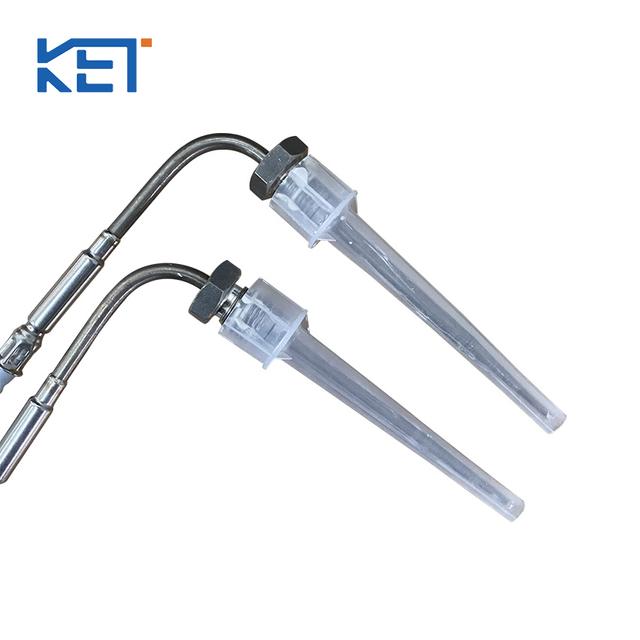
Identifying a faulty Diesel engine exhaust temperature sensor involves using a diagnostic tool like an OBD-II scanner to check for error codes. Common trouble codes such as P20E3 (Exhaust Gas Temperature Sensor Circuit) can point to issues with the exhaust temperature sensor. Physical inspection of the sensor and its wiring is also essential to check for signs of damage, wear, or corrosion.
When diagnosing a faulty sensor, look for the following OBD-II error codes:
● P0030: Exhaust Gas Temperature Sensor Circuit
● P0031: Low voltage from the exhaust temperature sensor
● P0032: High voltage from the exhaust temperature sensor
These error codes are indicators that the exhaust temperature sensor is malfunctioning and needs attention.
It may be possible to drive short distances with a faulty Diesel engine exhaust temperature sensor, but it’s not recommended. In certain cases, the ECU backup mode can compensate for the sensor failure by relying on preset, default parameters. While this can allow the vehicle to operate temporarily, the backup mode is not a permanent solution. The sensor’s data is crucial for optimizing engine performance, so operating without it can result in inefficient combustion, poor fuel economy, and reduced engine power.
If you choose to drive for short trips, you should monitor the vehicle closely for signs of performance issues, such as increased fuel consumption, rough idling, or hesitation during acceleration. Prolonged use without replacing the faulty sensor can lead to engine damage, especially when the vehicle is put under stress or high loads, like on highways or during heavy acceleration.
Driving with a faulty Diesel engine exhaust temperature sensor over an extended period can lead to catastrophic engine failure. The sensor’s primary role is to monitor and regulate exhaust temperature, and without it, the engine cannot effectively control combustion. This leads to unregulated exhaust temperatures that can escalate quickly, causing overheating in critical engine components.
Several key components are particularly vulnerable:
● Turbochargers: These are sensitive to heat, and excessive exhaust temperature can cause them to fail prematurely.
● Exhaust system: Extended exposure to high temperatures can cause damage to parts like the diesel particulate filter (DPF) and catalytic converter. Damage to these components often requires expensive repairs or replacement.
● Catalytic Converter: A faulty sensor can disrupt the combustion process, resulting in excessive fuel being injected, causing unburned fuel to flow into the exhaust system. This can lead to clogging or failure of the catalytic converter, which is vital for controlling vehicle emissions.
Besides mechanical damage, ignoring the faulty sensor can lead to increased emissions, making the vehicle non-compliant with environmental regulations. This could result in failing emission tests, fines, or inability to pass state-required inspections.
The longer you wait to replace the faulty sensor, the higher the potential costs involved. Continued driving without addressing the problem may also compromise vehicle safety due to potential engine failure, especially at high speeds or in critical driving situations. For instance, a sudden engine shutdown due to sensor malfunction while driving on highways can create dangerous conditions for you and other drivers on the road.
It is always advisable to replace a faulty Diesel engine exhaust temperature sensor as soon as possible to avoid these significant risks. Regular maintenance checks and diagnostics can help you identify sensor issues early, preventing costly damage and keeping your vehicle running efficiently.
1. Locate the sensor: The sensor is typically located along the exhaust manifold or near the diesel particulate filter (DPF).
2. Unplug and remove the old sensor: Disconnect the wiring harness and remove the faulty sensor.
3. Install the new sensor: Place the new sensor into position and securely reconnect the wiring.
Replacing a faulty Diesel engine exhaust temperature sensor is a straightforward process, but some vehicles may have sensors that are harder to access. If you are unsure or uncomfortable with performing the replacement yourself, it is advisable to seek professional assistance. A mechanic will ensure the sensor is correctly installed and calibrated, preventing further issues.
A faulty Diesel engine exhaust temperature sensor can lead to a range of engine problems, including poor performance, overheating, and increased fuel consumption. While it may be possible to drive short distances with a malfunctioning sensor, doing so can cause long-term damage to the engine and increase operational costs. Timely replacement and proper maintenance of the sensor are critical to ensuring the efficiency and longevity of your Diesel engine.
Zhejiang Kreation Electronic Technology Co., Ltd. provides high-quality Diesel engine exhaust temperature sensors, offering reliable solutions for vehicle owners to maintain optimal engine performance, reduce emissions, and save on fuel costs.
A: A Diesel engine exhaust temperature sensor monitors exhaust gas temperature to optimize performance and prevent overheating.
A: It is possible to drive with a faulty Diesel engine exhaust temperature sensor, but it can lead to engine performance issues, overheating, and increased fuel consumption.
A: Symptoms of a bad Diesel engine exhaust temperature sensor include poor engine performance, increased fuel consumption, and excessive emissions.
A: If the Diesel engine exhaust temperature sensor fails, it can cause incorrect data being sent to the ECU, resulting in poor combustion, engine hesitation, and overheating.
A: The Diesel engine exhaust temperature sensor helps protect critical engine components from overheating, ensuring optimal engine operation and preventing expensive damage.
A: A faulty sensor can cause the ECU to inject more fuel than necessary, leading to inefficient combustion and increased fuel consumption.


