
close
Choose Your Site
Global
Social Media
Views: 0 Author: Site Editor Publish Time: 2025-10-27 Origin: Site
In the realm of environmental monitoring and automotive engineering, the accurate measurement of nitrogen oxides (NOx) is critical. NOx, a term encompassing nitric oxide (NO) and nitrogen dioxide (NO2), plays a significant role in air pollution and has profound implications for public health and environmental policy. As regulatory standards become increasingly stringent, the demand for precise NOx monitoring technologies has surged. Among these technologies, the NOx Sensor stands out as a pivotal component in ensuring compliance and enhancing the efficiency of combustion processes. This article delves into the intricacies of NOx sensors, examining their design, functionality, and the challenges faced in achieving measurement accuracy.
NOx emissions are primarily produced during combustion processes, especially at high temperatures. They are prevalent in vehicle exhaust, industrial emissions, and power generation. The environmental impact of NOx is multifaceted. It contributes to the formation of ground-level ozone and fine particulate matter, both of which are detrimental to human health. Moreover, NOx plays a role in acid rain formation and can lead to nutrient pollution in water bodies, affecting aquatic ecosystems.
The health implications of NOx exposure are significant. Short-term exposure can lead to respiratory issues, while long-term exposure is linked to chronic respiratory diseases, heart conditions, and even premature death. Given these impacts, regulatory bodies worldwide have established stringent NOx emission limits, necessitating accurate monitoring and control technologies.
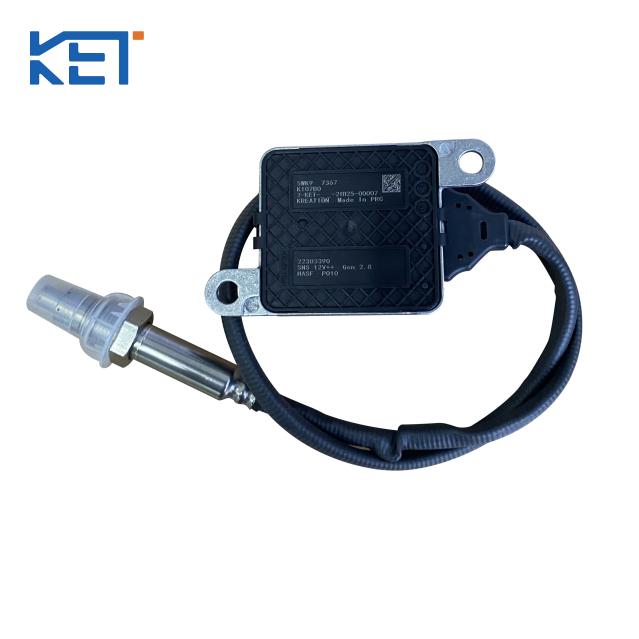
NOx sensors are integral to monitoring and controlling emissions in real-time. They are employed in various applications, from automotive exhaust systems to industrial smokestacks. The primary function of a NOx sensor is to measure the concentration of nitrogen oxides in exhaust gases, providing data that can be used to adjust combustion processes and reduce emissions.
These sensors operate based on electrochemical, optical, or semiconductor technologies. Electrochemical sensors, for instance, utilize a chemical reaction to produce an electrical signal proportional to the NOx concentration. Optical sensors, on the other hand, use light absorption techniques to determine NOx levels. Each technology has its advantages and limitations, influencing the choice of sensor based on the specific application requirements.
Despite advancements in sensor technology, achieving accurate NOx measurements remains challenging. One of the primary issues is sensor drift, where the sensor's accuracy degrades over time due to exposure to harsh conditions such as high temperatures and corrosive gases. Calibration drift can lead to significant errors in NOx readings, necessitating frequent recalibration and maintenance.
Interference from other gases is another challenge. NOx sensors must distinguish between NO and NO2, as well as other gases present in the exhaust, such as carbon monoxide (CO) and hydrocarbons. Advanced sensor designs incorporate selective catalytic reduction (SCR) systems and sophisticated algorithms to enhance selectivity and accuracy.
Recent advancements in NOx sensor technology have focused on improving accuracy, durability, and response time. Innovations in materials science have led to the development of sensors with enhanced thermal stability and resistance to chemical degradation. For instance, the use of advanced ceramics and metal oxides in sensor construction has significantly improved performance under extreme conditions.
Moreover, the integration of digital technologies has revolutionized NOx monitoring. Smart sensors equipped with wireless communication capabilities allow for real-time data transmission and remote diagnostics. This connectivity facilitates predictive maintenance, reducing downtime and operational costs. Additionally, machine learning algorithms are being employed to analyze sensor data, enabling more accurate predictions of NOx levels and optimizing combustion processes.
Several industries have successfully implemented NOx sensors to achieve regulatory compliance and improve operational efficiency. In the automotive sector, manufacturers have integrated NOx sensors into exhaust systems to meet stringent emission standards. These sensors provide feedback to engine control units (ECUs), enabling precise adjustments to air-fuel ratios and exhaust gas recirculation (EGR) systems.
In the power generation industry, NOx sensors are used to monitor emissions from gas turbines and boilers. By providing real-time data on NOx levels, these sensors help operators optimize combustion processes, reducing emissions and improving fuel efficiency. A notable example is the implementation of NOx sensors in combined cycle power plants, where they have contributed to significant reductions in NOx emissions and operational costs.

The accurate monitoring of NOx emissions is crucial for environmental protection and regulatory compliance. NOx sensors play a vital role in this endeavor, providing real-time data that enables the optimization of combustion processes and the reduction of harmful emissions. Despite the challenges in achieving measurement accuracy, advancements in sensor technology continue to enhance performance and reliability. As industries strive to meet increasingly stringent emission standards, the importance of NOx sensors will only grow, driving further innovation and adoption.
1. What are NOx emissions?
NOx emissions refer to nitrogen oxides, primarily nitric oxide (NO) and nitrogen dioxide (NO2), produced during combustion processes. They contribute to air pollution and have significant environmental and health impacts.
2. How do NOx sensors work?
NOx sensors measure the concentration of nitrogen oxides in exhaust gases using electrochemical, optical, or semiconductor technologies. They provide data for adjusting combustion processes to reduce emissions.
3. What challenges do NOx sensors face?
Challenges include sensor drift, interference from other gases, and maintaining accuracy under harsh conditions. Advanced designs and materials help mitigate these issues.
4. What advancements have been made in NOx sensor technology?
Advancements include improved materials for durability, integration of digital technologies for real-time data transmission, and the use of machine learning for data analysis.
5. How are NOx sensors used in the automotive industry?
In the automotive industry, NOx sensors are integrated into exhaust systems to monitor emissions and provide feedback to engine control units for optimizing air-fuel ratios and exhaust gas recirculation.
6. Why is accurate NOx monitoring important?
Accurate NOx monitoring is essential for environmental protection, regulatory compliance, and optimizing combustion processes to reduce emissions and improve efficiency.
7. What role do NOx sensors play in power generation?
In power generation, NOx sensors monitor emissions from turbines and boilers, providing data to optimize combustion processes, reduce emissions, and improve fuel efficiency.


