
close
Choose Your Site
Global
Social Media
Views: 0 Author: Site Editor Publish Time: 2026-01-19 Origin: Site
Diesel engines are powerful and fuel-efficient, but they contribute to harmful nitrogen oxide (NOx) emissions. These pollutants pose risks to human health and the environment. Modern diesel engines rely on Diesel NOx sensors to regulate these emissions.
In this article, we will explore the Diesel NOx sensor, how it works, and its importance in ensuring that diesel engines operate efficiently and meet environmental standards.
A Diesel NOx sensor is designed to measure the concentration of nitrogen oxides (NO and NO₂) in the exhaust gases of a diesel engine. These gases are produced during the combustion process, especially at high temperatures. While necessary for engine performance, NOx gases are harmful pollutants that contribute to smog, acid rain, and respiratory issues.
The NOx sensor continuously monitors the concentration of NOx in the exhaust gases and provides real-time data to the engine control unit (ECU). The sensor’s primary function is to ensure that the engine operates within permissible NOx emission limits set by environmental regulations, such as the Euro 6 standards. By accurately measuring NOx levels, the sensor plays a crucial role in optimizing the operation of the engine, reducing emissions, and improving fuel efficiency.
The Diesel NOx sensor works through an electrochemical process. It consists of a Nernst cell and a second cell, often made of ceramic material with a rhodium coating. The Nernst cell measures the concentration of NO and NO₂ gases in the exhaust. The second cell, typically a rhodium-coated ceramic element, breaks down these gases into nitrogen and oxygen.
When the sensor detects high levels of NOx, it sends the data to the Engine Control Unit (ECU). The ECU uses this information to adjust the Selective Catalytic Reduction (SCR) system. The SCR system injects Diesel Exhaust Fluid (DEF) into the exhaust stream, which reacts with NOx gases, converting them into harmless nitrogen and water. This process ensures that the diesel engine complies with emissions standards and reduces the environmental impact.
In modern diesel engines, there are typically two types of NOx sensors:
Upstream NOx sensors: These sensors are located before the SCR catalyst and measure the NOx emissions directly from the engine exhaust.
Downstream NOx sensors: Positioned after the SCR catalyst, these sensors verify the efficiency of the SCR system by measuring the reduced NOx levels in the exhaust.
Some advanced systems may use both upstream and downstream sensors for more precise control over emissions, while others may rely on a single sensor.
One of the main reasons for using a Diesel NOx sensor is to protect the environment. NOx gases are known to contribute to air pollution, including:
Smog formation: NOx gases react with volatile organic compounds in the air, creating ground-level ozone, a major component of smog.
Acid rain: When NOx combines with water vapor, it forms nitric acid, which falls as acid rain, damaging ecosystems and waterways.
Climate change: NOx gases indirectly contribute to global warming by forming particulate matter and affecting cloud formation.
By monitoring NOx levels, the Diesel NOx sensor helps control emissions, ensuring that diesel vehicles meet environmental regulations and minimize their environmental impact.
The Diesel NOx sensor does more than just monitor emissions—it also plays a key role in improving fuel efficiency and overall engine performance. Here’s how:
Optimizing the air-fuel ratio: The NOx sensor provides the ECU with data that helps optimize the air-fuel mixture for more efficient combustion. This reduces fuel consumption and enhances engine power.
Improved combustion: By ensuring that combustion occurs at the most efficient conditions, the sensor prevents excessive fuel consumption and harmful emissions.
This not only leads to better fuel economy but also reduces the vehicle’s carbon footprint, helping diesel engines operate more cleanly and efficiently.
Diesel vehicles are required to meet strict emissions standards, such as the Euro 6 regulations, which limit NOx emissions. A Diesel NOx sensor is essential for ensuring that a vehicle meets these standards and remains compliant with environmental laws. The sensor provides the real-time data needed to control emissions and helps avoid penalties, fines, or even the inability to drive in certain restricted areas.
A malfunctioning Diesel NOx sensor can negatively impact the engine’s performance and efficiency. Some common symptoms of a faulty sensor include:
● Check engine light (CEL): The check engine light will often illuminate when the sensor malfunctions.
● Increased fuel consumption: If the sensor is not working properly, the engine may run inefficiently, leading to higher fuel consumption.
● Reduced engine power: A faulty sensor can cause a decrease in engine performance, resulting in reduced acceleration and power.
● Failed emissions test: A faulty sensor can prevent the vehicle from passing emissions tests, causing legal and financial issues.
When the Diesel NOx sensor is not functioning correctly, it can lead to several problems:
Excessive NOx emissions: If the sensor fails to detect high NOx levels, the SCR system may not inject enough DEF, leading to increased emissions and non-compliance with regulations.
Poor fuel efficiency: An inaccurate sensor reading can prevent the engine from operating efficiently, leading to higher fuel consumption.
Engine limp mode: A faulty sensor can cause the engine to enter limp mode, reducing its power and limiting its performance.
To diagnose a faulty Diesel NOx sensor, a diagnostic tool such as an OBD-II scanner should be used to check for error codes. If the engine warning light is on or if you experience other symptoms, follow these steps:
Check the fault codes: Use an OBD-II scanner to retrieve diagnostic trouble codes (DTCs) to identify issues related to the NOx sensor.
Inspect the sensor: Look for soot buildup, corrosion, or damage around the sensor that might interfere with its performance.
Check live data: Compare pre- and post-SCR readings to verify that the sensor is providing accurate data.
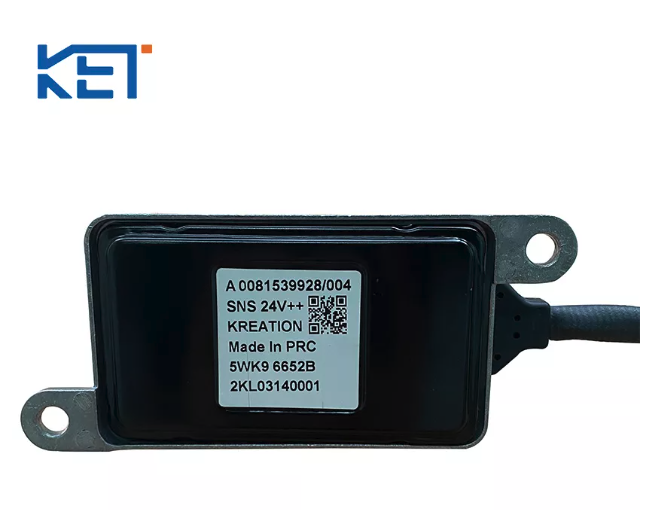
Although Diesel NOx sensors are self-cleaning, regular maintenance is necessary to keep them functioning properly. Here’s how to maintain the sensor:
Inspect regularly: Perform regular inspections, especially in high-mileage vehicles, to ensure that the sensor is in good condition.
Check for soot buildup: Excessive soot or debris can clog the sensor, preventing accurate readings. Ensure that the sensor is free from buildup.
Replace when necessary: If the sensor is damaged or malfunctioning, it is crucial to replace it promptly to avoid further engine issues.
If the Diesel NOx sensor is faulty, follow these steps for replacement:
Locate the sensor: Identify the correct NOx sensor in the exhaust system.
Disconnect the battery: To avoid electrical damage, disconnect the vehicle’s battery before replacing the sensor.
Remove the faulty sensor: Unscrew or unclip the old sensor and carefully remove it.
Install the new sensor: Install the new sensor, ensuring it is properly positioned and securely fastened.
Reconnect the battery: Once the sensor is installed, reconnect the battery and test the vehicle to ensure the sensor is functioning correctly.
When replacing a Diesel NOx sensor, you have the option to choose between OEM (Original Equipment Manufacturer) sensors and aftermarket alternatives. Below is a comparison:
Feature | OEM NOx Sensors | Aftermarket NOx Sensors |
Compatibility | Guaranteed to match original specifications | May vary, need to verify compatibility with the vehicle |
Durability | Designed for long-term use with high durability | Varies; typically less durable than OEM sensors |
Performance | Optimal performance and accuracy | May offer slightly reduced accuracy or performance |
Cost | Higher initial cost but long-term savings | More affordable, but may incur higher long-term repair costs |
Warranty | Typically comes with manufacturer’s warranty | Varies, often includes a limited warranty |
Installation | Designed for easy installation with proper fit | May require adjustments or additional parts for installation |
Replacing a Diesel NOx sensor can be costly, with the sensor itself ranging from $200 to $500, depending on the vehicle make and model. Labor costs for sensor replacement can add an additional $100 to $200.
A properly functioning NOx sensor offers several benefits:
Improved fuel efficiency: By optimizing combustion, the sensor helps reduce fuel consumption and operational costs.
Extended engine life: By ensuring that the engine operates efficiently, the sensor helps protect critical components of the exhaust system, such as the SCR catalyst and Diesel Particulate Filter (DPF).
Reduced emissions: A functioning NOx sensor ensures compliance with emissions standards, helping to protect the environment and avoid fines.
Investing in high-quality Diesel NOx sensors offers long-term savings by ensuring optimal performance, durability, and accurate data. While the initial cost may be higher, OEM sensors, in particular, provide better reliability and a longer lifespan compared to cheaper aftermarket alternatives.
The Diesel NOx sensor plays a critical role in modern diesel engines by ensuring compliance with emissions regulations, improving fuel efficiency, and protecting the environment. By accurately monitoring and controlling NOx emissions, it ensures the vehicle operates efficiently and remains compliant with regulatory standards. Regular maintenance and timely replacement are key to maintaining optimal engine performance and minimizing environmental impact.
At Zhejiang Kreation Electronic Technology Co., Ltd., their high-quality NOx sensors offer exceptional performance, helping diesel engines run cleanly and efficiently while supporting environmental sustainability.
A: A Diesel NOx sensor monitors the levels of nitrogen oxides in the exhaust gases to help reduce harmful emissions and ensure the vehicle complies with environmental regulations.
A: The Diesel NOx sensor detects NO and NO₂ levels in the exhaust gases and sends data to the ECU, which adjusts the SCR system to reduce emissions.
A: It ensures compliance with emissions standards, improves fuel efficiency, and helps protect the environment by reducing NOx emissions.
A: Replacing a Diesel NOx sensor can cost between $200 to $500, depending on the vehicle make and model.
A: Common issues include soot buildup, sensor malfunction, and inaccurate readings, leading to poor engine performance and higher emissions.


