
close
Choose Your Site
Global
Social Media


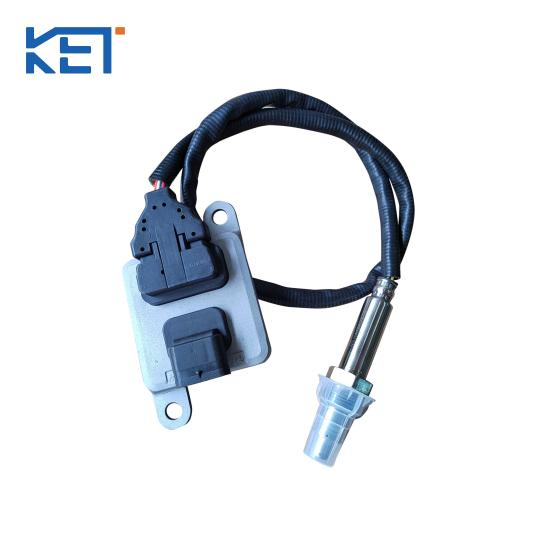
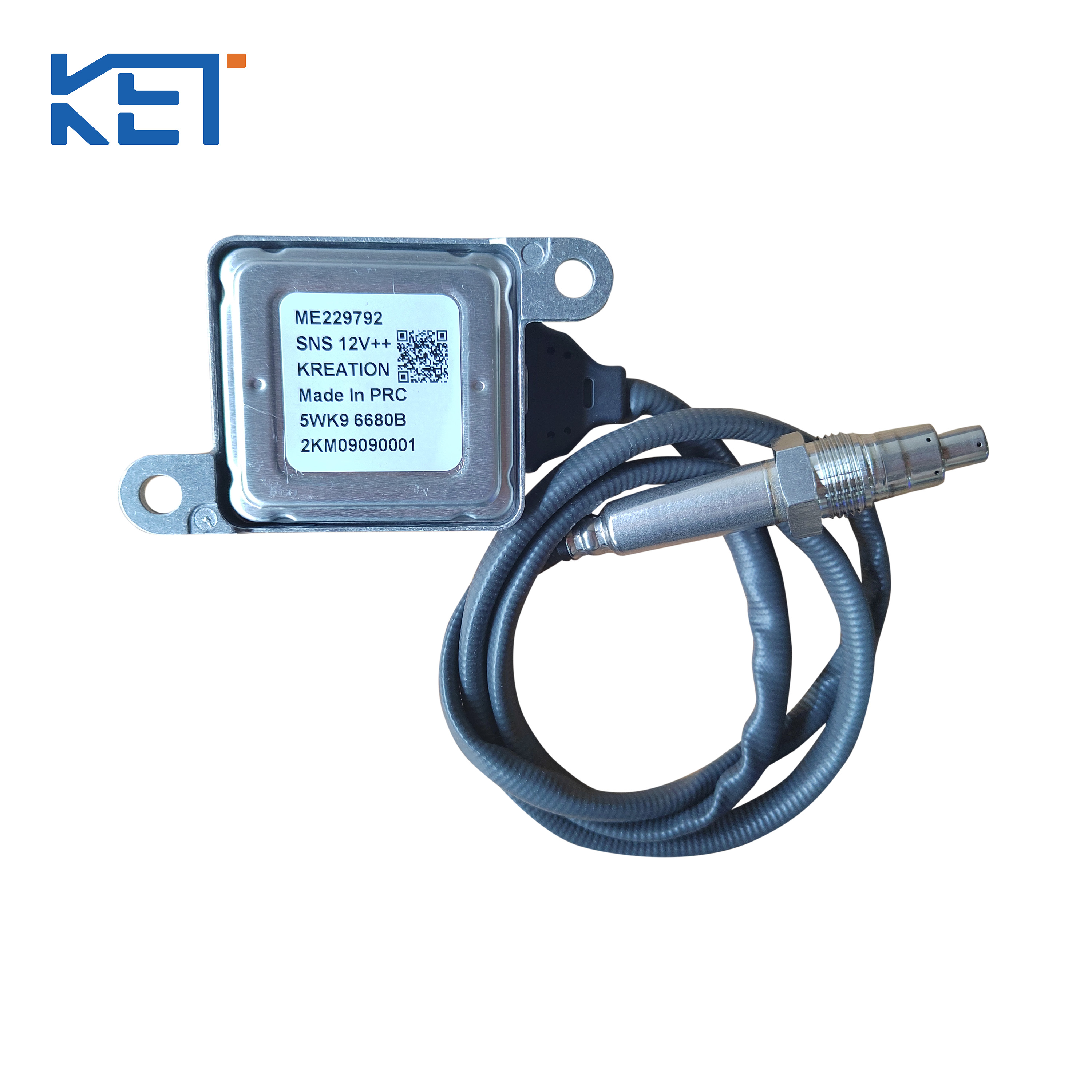
The 5WK9 6680B NOx sensor is manufactured for diesel engine aftertreatment matching, with fixed cross-reference part codes recorded as ME229792 and 2KM09090001. The product runs on 12V power supply and carries the mark Made In PRC under the brand Kreation, produced by Zhejiang Kreation Electronic Technology Co., Ltd., a manufacturer focusing on exhaust monitoring sensors for industrial equipment. This component serves emission monitoring demands for industrial diesel machinery, delivering measurable exhaust gas data to engine control units to adjust urea injection volume under SCR system operation. The product design aligns with global emission control policies for construction, agricultural and stationary engine equipment to meet local exhaust inspection standards for commercial operation.
The production facility focuses on four core sensor categories: NOx sensors, exhaust temperature sensors, DEF quality SCU and oxygen sensors. All production lines follow unified component calibration processes before delivery to commercial procurement clients. Each unit passes gas concentration testing inside closed calibration chambers before packaging.
Parameter Item | Recorded Value |
|---|---|
Power Supply | 12V |
Detected Gas Type | NOx (NO, NO₂), O₂ |
Output Signal Type | Digital Signal |
Core Auxiliary Function | Self-calibration module |
Matching System | SCR diesel exhaust aftertreatment |
Single Package Quantity | 1 unit per standard package |
 |  |
The sensor captures two gas components within fixed testing windows. It does not support carbon monoxide concentration testing, which removes mismatching risks for industrial equipment that only requires NOx and oxygen feedback signals. Digital signal transmission reduces signal interference generated by high-temperature exhaust pipelines, enabling stable data exchange with ECU hardware installed on heavy-duty machinery.
The digital signal interface connects directly with mainstream engine management hardware without additional signal conversion adapters. The communication protocol matches standard SCR control systems used in construction bulldozers, tractors and stationary power generators, shortening installation steps during equipment assembly for commercial users.
The internal self-calibration mechanism triggers automatic reading adjustment during continuous operation. The module runs periodic calibration cycles to offset measurement drift caused by long-term high-temperature exhaust exposure. This mechanism cuts manual calibration frequency for maintenance teams and reduces equipment downtime during industrial operation cycles.
The sensor fits exhaust pipelines of excavators and bulldozers deployed on construction sites. Real-time NOx data helps construction equipment maintain exhaust values within local regulatory limits during daytime construction operations.
Tractors and combine harvesters with diesel engines can install this sensor to support emission compliance during farm operation seasons. The component maintains stable output under vibration generated by farm field uneven ground.
Standby generators and cogeneration units use this sensor to monitor NOx levels during long-duration power supply cycles. The sensor’s self-calibration function reduces routine inspection work for facility operation teams.
Standard single-unit samples are available for performance testing before bulk procurement. Volume order thresholds and corresponding production lead times can be sent upon written inquiry from enterprise customers.
Each sensor carries a fixed warranty period covering factory manufacturing defects. Damage caused by improper installation, over-temperature exhaust or external mechanical impact is excluded from warranty coverage.
Buyers may provide equipment OEM codes or original sensor part numbers for cross-checking to avoid mismatched hardware after delivery. All cross-reference part numbers are listed on product specification sheets.
The self-calibration cycle activates automatically based on continuous operating hours, with no manual trigger required by maintenance staff. Calibration logs can be read via ECU diagnostic tools.
Regular external surface cleaning of exhaust pipeline attachments is recommended. No manual calibration work is needed within the sensor’s standard service cycle under rated operating conditions.


