close
Choose Your Site
Global
Social Media
Views: 0 Author: Site Editor Publish Time: 2026-05-18 Origin: Site
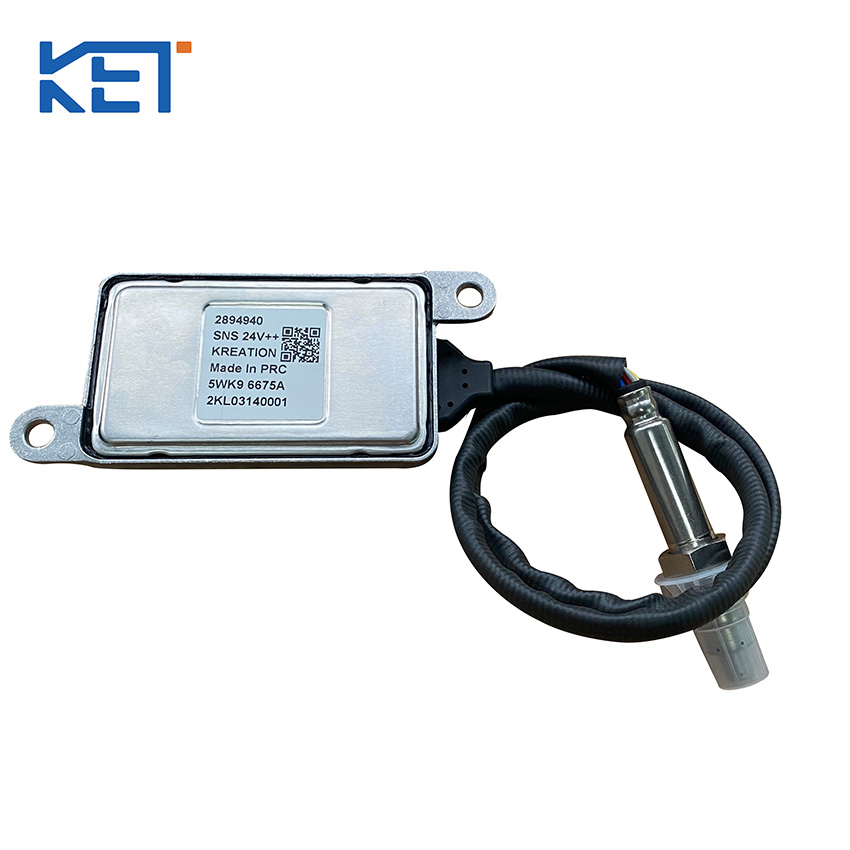
Post-treatment system failures create severe financial threats for modern fleets. A sudden 5 mph forced engine derate halts trucks immediately. You experience cascaded supply chain delays almost instantly. The EPA recently changed its regulatory guidance significantly. They are actively phasing out outdated Urea Quality Sensor mandates. Fleet compliance now relies completely on the precision of NOx Sensors to monitor emissions. Whether you manage Class 2b delivery vans or Class 8 long-haul rigs, maintenance strategies must adapt. Replacing a failed probe is no longer a generic parts-swap. You must understand the exact requirement thresholds for Light-Duty versus Heavy-Duty applications. Mastering this difference helps fleets avoid immediate fault codes, "parts cannon" misdiagnoses, and repeated downtime.
Regulatory Pressure: Heavy-duty NOx sensors face stricter "useful life" mandates (e.g., CARB Omnibus 800k-mile/12-year requirements) compared to light-duty equivalents.
Operational Extremes: HD sensors must survive advanced thermal management conditions, including close-coupled SCR architectures and cylinder deactivation heat spikes (>500°C).
Diagnostic Precision: Up to 50% of replaced NOx sensors are mechanically fine; true failure must be isolated using dynamic testing (e.g., disabling DEF during forced regen to look for a >50 ppm delta).
Procurement Reality: NOx sensors are highly engine-specific. Minor firmware or calibration mismatches will instantly trigger a check engine light (CEL) and derate protocols.
The EPA recently updated its enforcement guidance for heavy diesel applications. Regulators removed strict mandates for DEF quality sensors. Historically, these specific parts failed more frequently than any other SCR component. Now, agencies shift the entire emissions monitoring burden onto different hardware. Regulators rely entirely on upstream and downstream NOx Sensors. This policy shift places absolute importance on sensor accuracy and reliability.
Inferior parts trigger erroneous inducements routinely. A simple calibration error activates a crippling 5 mph engine derate. Drivers lose valuable operational hours immediately. Premium OEM-grade units prevent these costly false positives. Avoiding just a single false derate easily justifies the higher initial purchase price. Subpar components often read false highs, tricking the ECU into over-dosing DEF or shutting down the truck entirely.
Modern enforcement uses On-Board Sensing, Analysis, and Reporting (OSAR). The transition to OSAR means continuous real-world monitoring. NOx Sensors must maintain accuracy within 15% of high-grade laboratory equipment. They must perform flawlessly during low-load, low-temperature urban idling conditions. Any slight deviation from standard parameters flags the vehicle for non-compliance instantly.
Both categories use similar electro-catalytic ceramic technology inside the probe. However, their form factors vary drastically. Thermal tolerances and data processing speeds differ heavily between applications. Using the wrong classification guarantees immediate failure.
Light-duty applications face standard exhaust temperatures daily. Load cycles remain relatively predictable during operation. Final-mile delivery vans and passenger pickups fit this operational profile perfectly. They rarely experience the punishing heat of a fully loaded Class 8 climb.
Engineers design these units using smaller probe profiles. They face less aggressive thermal shock requirements. Standard CAN bus communication speeds suffice for these engine control modules. The physical heat shielding is generally thinner and lighter.
Moisture accumulation represents the primary failure mode here. Frequent short-trip, low-heat cycles prevent moisture evaporation inside the exhaust. Condensation builds up rapidly during cold starts. This trapped moisture eventually cracks the internal ceramic element when it finally heats up.
Heavy-duty parts endure extreme continuous duty cycles. They handle highly variable loads across diverse terrains. Long-haul rigs, PTO operations, and off-road agriculture demand maximum durability. Operating environments punish every exposed electronic component relentlessly.
Manufacturers build them specifically for "Twin SCR" architectures. Advanced thermal management introduces extreme environmental challenges. Cylinder Deactivation (CDA) creates severe heat spikes intentionally. Components must withstand exhaust temperatures artificially spiked by 50°C-100°C during low-load operations. These high temperatures keep the SCR catalyst active.
They face high risks of extreme soot blinding. Sulfur (SO2) poisoning degrades measurement accuracy slowly over time. Intense thermal baking destroys poorly manufactured NOx Sensors over a vastly extended lifecycle. HD components require robust multilayer ceramic structures to survive.
Feature | Light-Duty (LD) | Heavy-Duty (HD) |
|---|---|---|
Typical Application | Class 2b - Class 5, Final-mile vans | Class 8, Long-haul, Off-highway |
Primary Failure Mode | Ceramic cracking from moisture | Soot blinding, thermal baking, SO2 poisoning |
Thermal Tolerance | Standard operating exhaust heat | Extreme spikes >500°C (CDA systems) |
Architecture | Single SCR system integration | Twin SCR, Close-coupled designs |
Changing regulations are not merely political talking points. They represent strict hardware engineering standards. Buyers must account for these rules during routine procurement. Upgraded standards force component manufacturers to completely redesign internal circuitry.
Heavy-duty engine components face incredible new benchmarks. CARB Omnibus rules push toward a 12-year or 800,000-mile useful life requirement. Parts must survive longer than ever before under harsher conditions. EPA 2027 standards mirror this demand for extreme longevity. Below are the key compliance shifts impacting fleets:
Extended Warranty Periods: Manufacturers must guarantee emissions components for substantially longer durations.
Low-Load Cycle Testing: Components must read accurately even in slow, congested city traffic.
In-Use Compliance: Enforcement occurs on the road using OSAR, not just inside testing laboratories.
Do not source "white box" aftermarket parts. Avoid non-certified components for HD trucks completely. They are mathematically incapable of surviving extended durability curves. Modern ECUs mandate strict voltage parameters. Installing cheap alternatives guarantees rapid, warranty-voiding failures.
Never buy a replacement until you prove the current part is dead. Up to half of replaced components are actually mechanically sound. Fleets waste thousands of dollars blindly replacing parts based on generic codes. Establish a strict evaluation framework for your technicians.
Technicians must understand the difference between circuit faults and efficiency faults. Misinterpreting these codes leads directly to the "parts cannon" approach. Pay close attention to the specific SPN and FMI combinations.
SPN 3216 / 3226 (FMI 3/4): These indicate circuit faults. Voltage is reading too high or too low. This usually points to wiring harness damage or a physical module failure.
SPN 3216 / 3226 (FMI 2/13): These signal CAN bus communication loss or severe data drift. The sensor gets stuck and fails to return to absolute zero.
SPN 4364 (FMI 18): This denotes low SCR conversion efficiency. Technicians frequently blame the sensor here. However, this often signals an actual SCR degradation or a DEF injector clog.
Technicians rely on a specific dynamic isolation test. You must evaluate the module while the exhaust flows actively. Temporarily disable the DEF injector system via your diagnostic software. Force a manual DPF regeneration to create high raw exhaust output.
Compare the upstream and downstream sensor readings simultaneously. A healthy system shows nearly identical raw exhaust values during this specific test. Look closely at the parts-per-million (ppm) output. If the delta between the two NOx Sensors exceeds 50 ppm, the unit is demonstrably faulty. Replacement is fully justified at this point.
Hardware must handshake perfectly with software. These components are never universal. A physically identical probe will fail if firmware mismatches occur. It simply will not communicate properly with the engine control module. The ECU will reject the foreign data packet instantly.
You must evaluate parts using a strict lens. OEM parts offer guaranteed compatibility. High-tier aftermarket options provide value but require careful vetting. Use the following chart to structure your procurement strategy.
Procurement Evaluation Chart | ||
Evaluation Lens | Standard Requirement | Common Mistake to Avoid |
|---|---|---|
Match by ESN | Match exactly to the Engine Serial Number. | Ordering solely based on truck make or year. |
Ceramic Quality | Use NGK or equivalent high-grade ceramic elements. | Ignoring sub-250°C fast activation capabilities. |
Warranty Support | Demand robust B2B warranties and tech support. | Buying from suppliers with zero firmware assistance. |
Always verify the exact Engine Serial Number (ESN). Specific truck configurations matter far more than basic make or model designations. A 2021 Freightliner Cascadia might use three different module versions depending on the factory build sheet.
Look carefully for high-grade ceramic elements. Fast activation times are absolutely crucial for low-load urban driving scenarios. Prioritize suppliers offering robust B2B warranties. Dedicated technical support teams handle unexpected firmware-matching anomalies efficiently when they inevitably occur.
The operational divide between light-duty and heavy-duty environments remains massive. Success comes down to understanding thermal resilience, ECU communication demands, and strict regulatory lifespans. Fleets cannot afford to treat these complex modules as generic maintenance items.
Stop guessing at ambiguous derate codes immediately. Always identify the exact Engine Serial Number before ordering parts. Run a dynamic delta test to confirm absolute failure before removal. Finally, consult a verified parts catalog to source a true OEM-equivalent replacement. These targeted actions eliminate unnecessary downtime completely.
A: No. Firmware, CAN bus data rates, and thermal protection shielding differ fundamentally. Plugging a light-duty unit into a heavy-duty harness results in immediate communication faults and potential derates.
A: Soot buildup and blinding from incomplete regenerations cause massive issues. Additionally, moisture-induced ceramic cracking occurs frequently during cold starts if the exhaust does not heat up properly.
A: Usually, yes. However, you must ensure the ECU is cleared properly. A system self-check or forced regeneration must be successfully completed to verify the new sensor's readings before the truck drives normally.
A: By phasing out standard DEF quality sensors, the EPA relies entirely on upstream and downstream sensors to monitor SCR health. This makes module accuracy more vital than ever for maintaining overall vehicle uptime.