close
Choose Your Site
Global
Social Media
Views: 0 Author: Site Editor Publish Time: 2026-05-05 Origin: Site
Euro 7 fundamentally rewrites automotive emissions rules across Europe. It transitions compliance from controlled laboratory environments to lifetime, real-world enforcement. Original Equipment Manufacturers (OEMs) and Tier 1 suppliers face intense resource pressures today. They must balance expensive zero-emission vehicle (ZEV) mandates while rapidly overhauling internal combustion engine (ICE) aftertreatment systems. Engineering teams cannot afford compliance missteps.
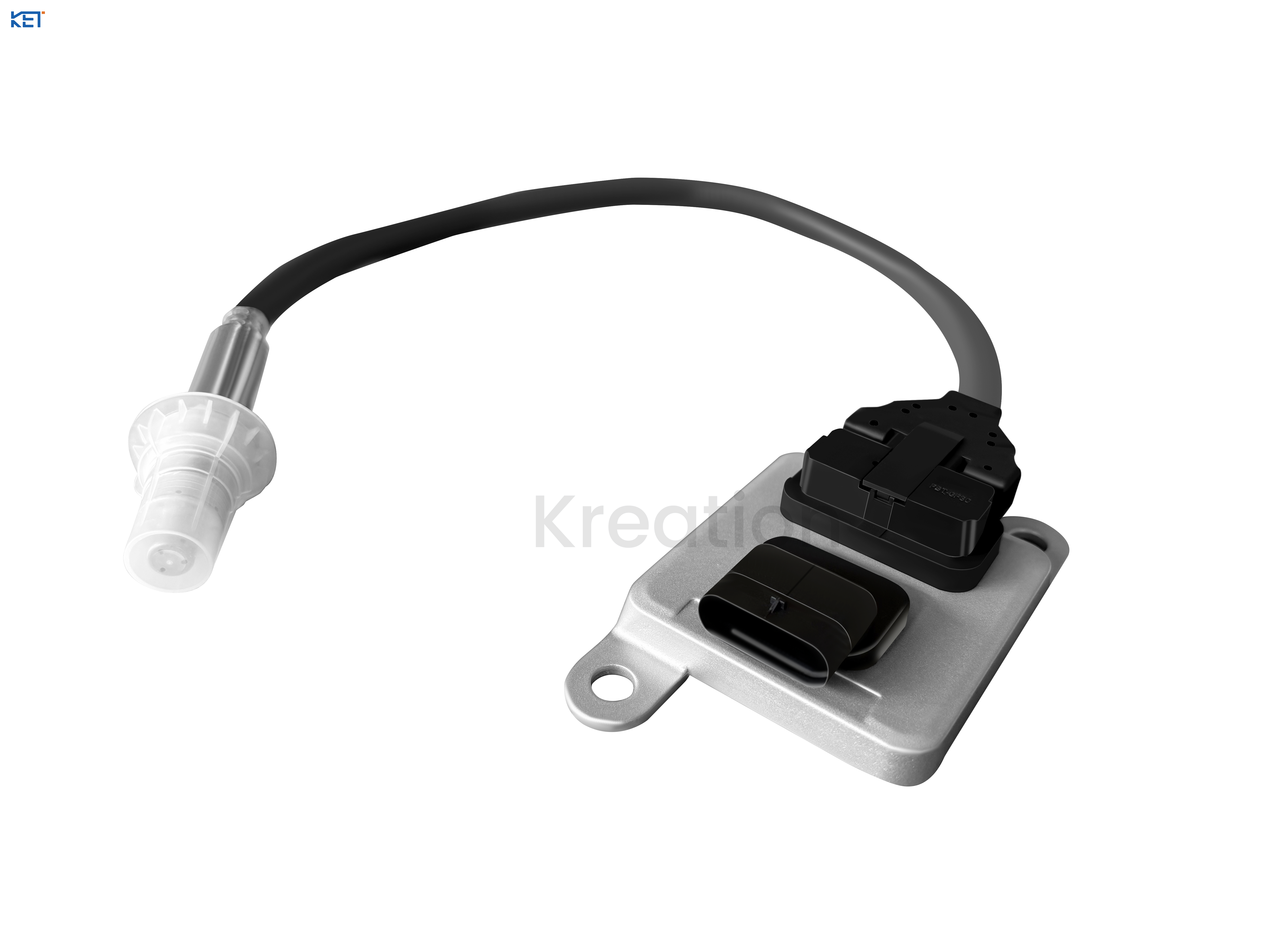
Under these strict new constraints, NOx Sensors operate no longer as simple feedback mechanisms. They now act as continuous, legal compliance auditors on the road. Choosing the correct sensor architecture represents a major risk-management decision for successful vehicle homologation. You will learn how shifting accuracy limits, doubled durability mandates, and extreme low-temperature demands dictate sensor selection. We will explore practical strategies to guarantee long-term regulatory approval and avoid crippling onboard monitoring penalties.
Zero Margin for Error: The Real Driving Emissions (RDE) Conformity Factor (CF) drops to 1.0, demanding absolute parity between lab and road NOx measurements.
Continuous Legal Auditing: Mandatory On-Board Monitoring (OBM) means sensor drift can now trigger immediate torque-limiting penalties and mandatory repairs.
Doubled Lifecycle Demands: Sensor durability must now guarantee accurate performance up to 200,000 km or 10 years, dramatically raising the bar for thermal and chemical resistance.
Cold-Start Sensitivity: Lowered power thresholds for emissions tracking force NOx sensors to perform reliably in sub-200°C exhaust environments alongside active heating systems.
Automakers previously relied on favorable measurement margins. Euro 7 completely removes this safety net. The regulation enforces laboratory-grade precision out on the open road. Engineers must rethink vehicle aftertreatment architecture from the ground up.
In previous iterations, regulations allowed a measurement tolerance. The Real Driving Emissions (RDE) Conformity Factor (CF) stood at 1.43. This margin accounted for portable emissions measurement system (PEMS) inaccuracies. Euro 7 eliminates this buffer entirely. The CF drops strictly to 1.0. Vehicles must emit exactly the same low NOx levels on unpredictable city streets as they do on a chassis dynamometer. This reality requires ultra-precise emission tracking across highly dynamic engine loads.
Euro 7 transforms the vehicle into its own emissions inspector. It introduces mandatory On-Board Monitoring (OBM). This system actively tracks tailpipe output throughout the vehicle's lifespan. If an onboard sensor detects emissions exceeding the legal limit by 2.5 times, it flags the vehicle for non-compliance. The vehicle will alert the driver and eventually enforce torque limits until repaired. This mechanism turns false sensor readings into severe operational bans. You must ensure sensor accuracy remains absolute to protect brand reputation.
Regulators also closed previous testing loopholes. Euro 7 expands the legal operating window to capture extreme conditions. Vehicles must now comply under scenarios previously considered exempt.
Extreme Temperatures: Compliance is required in ambient temperatures up to 45°C.
Urban Stop-and-Go: Heavy traffic idling and low-speed creeping now count fully toward emission limits.
Short Commutes: Brief trips under 10 kilometers must meet stringent caps, demanding instant system activation.
Sensor precision dictates system success under Euro 7. You can no longer accept minor reading deviations. Accuracy must hold firm across tens of thousands of operating hours.
Sensor aging introduces signal drift. A sensor might slowly misread exhaust gas concentrations over years of use. This drift presents a massive engineering hurdle. An artificially high reading could trigger false positive OBM warnings. Conversely, an artificially low reading might mask actual Selective Catalytic Reduction (SCR) failures. Advanced calibration algorithms and stabilized ceramic structures are necessary to lock baseline accuracy over the vehicle's life.
Engineers face complex chemical environments in the exhaust stream. Euro 7 introduces strict new limits on Ammonia (NH3) and Nitrous Oxide (N2O). Heavy-duty vehicles often employ dual-SCR setups to meet deep NOx reduction targets. These systems inject large amounts of urea, increasing the risk of NH3 slip. Standard sensors often mistake NH3 for NOx. Next-generation NOx Sensors must feature advanced cross-sensitivity mitigation. Specialized electrode coatings help filter out NH3, preventing false readings and unnecessary OBM penalties.
RDE data logging requires high-speed signal processing. Older sensor architectures suffer from slight measurement delays. When tracking fast-changing engine transients, even a few milliseconds of latency skews the data. Modern compliance relies on microprocessors capable of transmitting real-time exhaust compositions. You must prioritize components offering instantaneous data delivery to the central engine control unit (ECU).
Regulatory Metric | Euro 6 / VI Standard | Euro 7 / VII Standard | Engineering Impact |
|---|---|---|---|
Conformity Factor (CF) | 1.43 | 1.00 | Demands laboratory-equivalent precision on the road. |
Monitoring Mechanism | OBD (Fault Codes) | OBM (Real-Time Volume) | Requires anti-tampering and live volume tracking. |
Target Contaminants | NOx, CO, HC | Adds NH3, N2O limits | Requires strict chemical cross-sensitivity mitigation. |
The lifespan of exhaust components must essentially double. Euro 7 pushes vehicle durability requirements to extreme new lengths. Engineers must select materials capable of surviving an incredibly hostile environment for a decade.
Euro 6 required emissions components to last 100,000 kilometers or five years. Euro 7 doubles this mandate. Components must guarantee accurate performance up to 200,000 kilometers or ten years. This massive technical leap directly stresses the sensor's ceramic heater element. Continuous high-temperature operation degrades internal heater traces. To survive this extended lifecycle, manufacturers must utilize highly refined, multi-layer ceramic designs that resist micro-fractures.
New engine hardware dictates new chemical environments. To reduce particulate matter, Euro 7 engines rely heavily on low-SAPS (Sulphated Ash, Phosphorus, and Sulphur) lubricants. However, even these advanced oils slowly introduce trace contaminants into the exhaust stream over 200,000 kilometers. Phosphorus and ash deposits coat the sensor probe. This blocks gas molecules from reaching the sensing electrodes. NOx Sensors require advanced protective layers to resist chemical poisoning without slowing down gas diffusion rates.
A decade of driving includes thousands of brutal temperature swings. Sensors face rapid heating and cooling cycles every day. This creates severe thermal shock risks.
Cold Weather Start-ups: Frozen exhaust pipes generate heavy internal condensation.
Water Droplet Impact: If water hits a rapidly heating ceramic sensor element, the ceramic can shatter instantly.
Design Mitigation: Sensor housings must feature specialized double-tube probe designs. These structures trap moisture and deflect droplets away from the fragile internal ceramic chips.
Historically, heavy-duty trucks struggled with emissions during slow city driving. Exhaust temperatures simply remained too low. Euro 7 directly attacks this gap by tightening low-load compliance windows.
Regulators use a Moving Average Window (MAW) to evaluate emissions data continuously. Under Euro VI, the power threshold for this window stood at 10%. Euro VII drops this threshold down to 6%. This small percentage change carries huge implications. It forces full regulatory compliance during low-speed, low-load commercial operations. Garbage trucks creeping through neighborhoods or delivery vans idling in traffic must now maintain zero-emission equivalency. Sensors must track data perfectly during these ultra-low-flow scenarios.
Standard SCR systems rely on heat. Catalytic conversion typically requires exhaust temperatures above 220°C to achieve light-off. During a cold start, exhaust gases sit well below 200°C. Standard sensors remain dormant here to prevent water condensation from cracking their heated ceramic elements. However, Euro 7 demands immediate emissions tracking. Engineers face physical limitations when trying to measure gas volumes in dense, wet, cold exhaust streams safely.
To solve the temperature deficit, OEMs now pair complex Exhaust Aftertreatment Systems (EATS) with active thermal management. You will frequently see Exhaust Gas Heaters (EGH) or close-coupled diesel oxidation catalysts (ccDOC) installed near the manifold. Sensors must synchronize flawlessly with these systems.
Faster Wake-up Protocols: Sensors must reach operating temperature much earlier in the ignition cycle.
Heater Synchronization: The ECU must coordinate the EGH activation with the sensor's internal dew-point logic.
Strategic Placement: Probes must sit close enough to the heat source to activate quickly, but far enough away to avoid heat degradation over the 200,000 km lifespan.
Procurement and engineering teams face a shrinking pool of qualified suppliers. Sourcing the right sensor requires a rigorous audit of technical capabilities rather than superficial spec comparisons.
You must map specific sensor attributes directly to your homologation outcomes. A sensor's physical build dictates your vehicle's regulatory success.
Modified Electrode Structures: Mitigate NH3 cross-sensitivity, directly preventing false OBM penalties.
Multi-layer Ceramics: Prevent heater degradation, ensuring the vehicle meets the 10-year durability mandate.
Optimized Probe Housings: Deflect condensation droplets, eliminating thermal shock failures during cold-start scenarios.
When evaluating supply partners, engineers must demand complete transparency. Do not accept basic bench-test data. Ask for verifiable accelerated aging test results that simulate 200,000 kilometers of road use. Evaluate their transparent RDE testing data. Ensure they possess proven capability in OBM integration. A supplier must demonstrate how their software handshakes with primary ECUs to deliver fast, uncorrupted data packets. Partner only with manufacturers who treat sensors as integrated system components rather than isolated hardware parts.
Euro 7 completely reshapes the landscape for internal combustion engines. Compliance remains practically impossible without highly robust, OBM-ready sensor architectures. You must prioritize components built for extreme thermal resilience and unwavering signal accuracy.
While the broader automotive industry continues investing heavily in electrification, internal combustion engines will still power millions of heavy-duty and commercial vehicles for decades. Surviving this difficult ICE transition requires deep strategic alignment. You must partner with sensor suppliers who fully understand lifetime compliance, not just day-one homologation.
Start evaluating your supply chain immediately. We encourage engineering leads and procurement managers to request comprehensive lifetime durability data and cross-sensitivity validation from their current sensor partners.
A: The timeline phases in gradually. New light-duty vehicle types must comply by November 2026. All new light-duty vehicles sold must comply by November 2027. Heavy-duty vehicles follow a slightly longer timeline, with implementation phases occurring between 2028 and 2029.
A: OBM shifts diagnostics from simple static OBD fault codes to real-time emissions volume tracking. It actively measures tailpipe output against legal limits. It features strict anti-tampering enforcement, ensuring immediate detection and torque-limiting penalties if emissions exceed 2.5 times the allowable threshold.
A: Yes. While Euro 7 consolidates the regulatory framework, heavy-duty vehicles (HDVs) face much stricter hardware complexities. HDVs typically utilize dual-SCR setups and Exhaust Gas Heaters (EGH). This requires HDV sensors to possess superior resistance to ammonia (NH3) cross-sensitivity and withstand harsher thermal cycles.
A: No. While the fundamental sensing technology looks similar, Euro 6 sensors cannot meet the new standards. They generally lack the doubled durability, rapid low-temperature activation, and strict CF=1.0 precision required to survive Euro 7 OBM compliance mechanisms without triggering false penalties.