
close
Choose Your Site
Global
Social Media
Views: 0 Author: Site Editor Publish Time: 2025-11-12 Origin: Site
Modern vehicles are equipped with advanced emission control systems to meet increasingly strict environmental regulations. Among these critical components, the NOx sensor plays a vital role in reducing harmful nitrogen oxide emissions and ensuring efficient engine performance.
However, when a NOx sensor fails, it can lead to a chain of problems — from reduced fuel economy and power loss to higher emission levels and potential system damage. Understanding what happens when your NOx sensor fails is essential for maintaining both engine health and compliance with emission standards such as Euro 6 or EPA regulations.
In this article, we’ll explore the symptoms, causes, and consequences of NOx sensor failure, as well as how to diagnose and fix the issue before it leads to costly repairs.
The NOx sensoroperates similarly to a wideband oxygen sensor. It contains an electrochemical cell that measures the concentration of nitrogen oxides in the exhaust gas.
Here’s what happens in simple terms:
Exhaust gases pass over the sensor’s detection chamber.
The sensor separates and measures the oxygen and nitrogen components.
It sends voltage signals to the ECU, which interprets them as NOx levels.
The ECU fine-tunes combustion and exhaust after-treatment systems to maintain efficiency.
There are typically two sensors in modern systems:
Upstream NOx sensor: Located before the SCR catalyst, it measures engine-out NOx.
Downstream NOx sensor: Located after the SCR catalyst, it ensures the catalytic converter is effectively reducing emissions.
When either of these sensors fails, the ECU can no longer control emissions accurately — leading to engine warning lights, poor fuel economy, and limp mode.
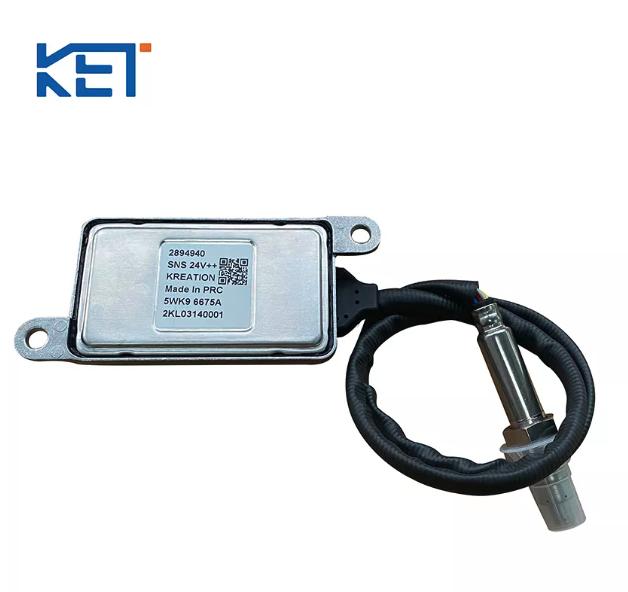
When a NOx sensor fails, your vehicle’s Engine Control Unit (ECU) can no longer receive accurate data about nitrogen oxide emissions in the exhaust stream. Because the ECU relies on this information to fine-tune combustion and manage the Selective Catalytic Reduction (SCR) and EGR (Exhaust Gas Recirculation) systems, any disruption causes the engine to lose its ability to balance performance, efficiency, and emissions.
To protect vital components from potential damage, the ECU automatically switches to a default “safe” operating mode, commonly known as limp mode. In this mode, the system limits engine power, fuel injection, and turbocharger boost to minimize emissions while preventing further harm to the catalytic converter or DPF (Diesel Particulate Filter).
Here’s what typically happens when your NOx sensor fails:
Check Engine Light (CEL) Illumination
The most immediate symptom is the activation of the check engine light on your dashboard. The ECU detects inconsistent or missing NOx data and triggers a fault code to alert you of an emissions-related issue.
Diagnostic Trouble Codes (DTCs)
Common fault codes such as P229F (NOx Sensor 2 – performance), P22EE (NOx Sensor Circuit Range/Performance), or P2202 (NOx Sensor Circuit Low Input) are stored in the ECU. These codes help technicians identify whether the problem is with the upstream or downstream sensor.
Reduced Engine Performance and Limp Mode Activation
Once the ECU detects failure, it limits engine torque, RPM, and acceleration response. This “limp” condition prevents the engine from operating at full load, ensuring emission levels don’t exceed regulatory limits.
Decreased Fuel Efficiency
Without accurate NOx feedback, the ECU can’t optimize the air-fuel ratio or urea injection (AdBlue dosing). As a result, the engine may run rich, burning more fuel than necessary and increasing operating costs.
Higher NOx and Soot Emissions
The malfunction causes incomplete reduction of nitrogen oxides, leading to excessive pollution. In diesel engines, this also increases soot formation, potentially clogging the DPF faster.
Catalytic Converter and DPF Damage Risk
Continuous incorrect exhaust readings force the SCR system to work under abnormal conditions. Over time, this can cause thermal stress, crystal buildup from unburned AdBlue, or even premature failure of the catalytic converter.
Failed Emissions or MOT Inspection
If the NOx sensor remains faulty, your vehicle’s emissions will exceed legal thresholds. This leads to a failed inspection, possible fines in low-emission zones, or even registration suspension in stricter jurisdictions.
There are several possible reasons behind NOx sensor failure, ranging from harsh operating conditions to electrical faults. Understanding these causes helps vehicle owners take preventive measures and extend the lifespan of their emission control systems.
The NOx sensor operates in one of the harshest environments in a vehicle — the exhaust stream. Temperatures can easily exceed 800°C (1470°F), especially in diesel engines during regeneration cycles.
Prolonged exposure to extreme heat can cause:
Cracks in the ceramic element,
Thermal fatigue in solder joints, and
Degradation of the sensor’s internal circuitry.
Once the electronic components are damaged, the sensor can no longer send reliable readings to the ECU, triggering fault codes and limp mode. Installing proper heat shields and ensuring correct exhaust insulation can help prevent thermal failure.
Contamination is another leading cause of NOx sensor malfunction. Over time, the sensor’s tip may become coated with carbon deposits, unburned hydrocarbons, oil residue, or coolant leaks. These layers block the sensing chamber and distort the oxygen and nitrogen oxide readings.
This type of contamination often occurs due to:
A malfunctioning EGR (Exhaust Gas Recirculation) valve,
Incomplete combustion, or
Engine oil leaks into the exhaust system.
When the sensor gets clogged, it reacts slower to changes in exhaust composition, leading to incorrect fuel-air adjustments and higher emissions. Periodic cleaning or inspection during DPF maintenance can prevent such buildup.
Because NOx sensors rely on precise voltage signals, even minor wiring or connector faults can cause intermittent failures.
Common electrical problems include:
Corroded or oxidized connectors,
Broken or frayed wires from road vibration,
Water ingress or salt corrosion in plug terminals, or
Loose fittings after exhaust replacement.
These issues often result in false fault codes like P2202 or P22A1, even when the sensor itself is still functional. A visual inspection of the wiring harness and connectors should always be part of the diagnostic process.
Although less common, ECU software errors can also cause NOx-related problems. In such cases, the ECU misreads a properly functioning sensor as faulty due to outdated calibration maps or firmware conflicts.
This is often seen after:
Aftermarket tuning or remapping
Partial DPF/AdBlue system deletes.
Updating the ECU software or performing a re-adaptation procedure with professional diagnostic tools can resolve these false alarms.
Like any component exposed to high heat and exhaust gas, a NOx sensor has a finite lifespan. Most sensors last between 60,000 and 100,000 miles (96,000–160,000 km) under normal conditions.
Over time, the repeated heat cycles and exposure to moisture gradually degrade the electrode materials, ceramic body, and protective coatings.
Aging sensors begin to respond slower and may intermittently misread emissions, leading to higher fuel consumption or failed MOT tests. Routine inspection during major services ensures timely replacement before total failure occurs.
Accurate diagnosis requires more than just reading a fault code. A proper process includes:
Full Fault Code Scan: Use a professional diagnostic tool (Autel, Launch, or OEM-level scanner) to read active and historical codes.
Live Data Monitoring: Observe NOx readings, voltage levels, and response times at idle and under load.
Visual Inspection: Check for melted cables, corroded connectors, or soot deposits.
Cross-Check with Other Sensors: Compare readings with oxygen sensors or EGR data to rule out related faults.
Road Testing: Clear codes, drive the vehicle, and observe if the fault reappears.
Depending on the issue, you may not always need a full replacement. Here are your options:
If contamination is mild, some technicians clean and recalibrate the sensor using specialized equipment.
If the sensor is damaged, replacement is the only long-term solution.
OEM-quality sensors ensure better accuracy and longevity.
Expect a cost between $250–$700, depending on your vehicle model and labor rates.
After installing a new sensor, clearing fault codes and updating the ECU software ensures proper communication.
While replacement is straightforward, diagnosis isn’t. Professional service prevents costly misdiagnosis, especially when multiple sensors are involved.
When a NOx sensor fails, the ECU receives incorrect or no data about exhaust gases. This causes the engine to enter limp mode, reduces power, increases fuel consumption, and can lead to failed emissions tests.
You can test a NOx sensor using a professional diagnostic tool that reads live data and fault codes. Check voltage signals, response times, and compare readings from upstream and downstream sensors to confirm malfunction.
In some mild cases, cleaning can help if the sensor is only contaminated with soot or carbon buildup. However, cleaning is a temporary fix — if the sensor’s internal electronics are damaged, it must be replaced.
A NOx sensor typically lasts between 60,000 and 100,000 miles (96,000–160,000 km). Lifespan depends on driving habits, exhaust temperature, and fuel quality.
A failing NOx sensor can compromise not only your vehicle’s performance but also its environmental footprint. Prompt diagnosis and replacement are key to preventing fuel waste, engine inefficiency, and emission control failure.
For reliable and high-quality NOx sensor solutions, Zhejiang Kreation Electronic Technology Co., Ltd. offers a complete range of automotive emission sensors designed for durability, accuracy, and compatibility with major vehicle brands. With years of experience in automotive electronics and a strong commitment to innovation, Kreation helps global customers maintain cleaner engines and meet the latest emission standards.


