close
Choose Your Site
Global
Social Media
Views: 0 Author: Site Editor Publish Time: 2026-05-25 Origin: Site
Heavy-duty vehicle downtime due to emissions system derating is a massive hidden cost for fleet operators. Faulty emissions components often serve as the primary culprit behind these unexpected groundings. When trucks sit idle, delivery schedules collapse and revenue drops rapidly.
The aftermarket is currently flooded with cheap, unreliable knock-offs. These poor-quality alternatives fail early due to severe thermal shock or aggressive chemical corrosion. Conversely, dealership original parts usually carry exorbitant markups and suffer from notoriously long lead times. Operators find themselves trapped between paying too much or settling for parts destined to fail.
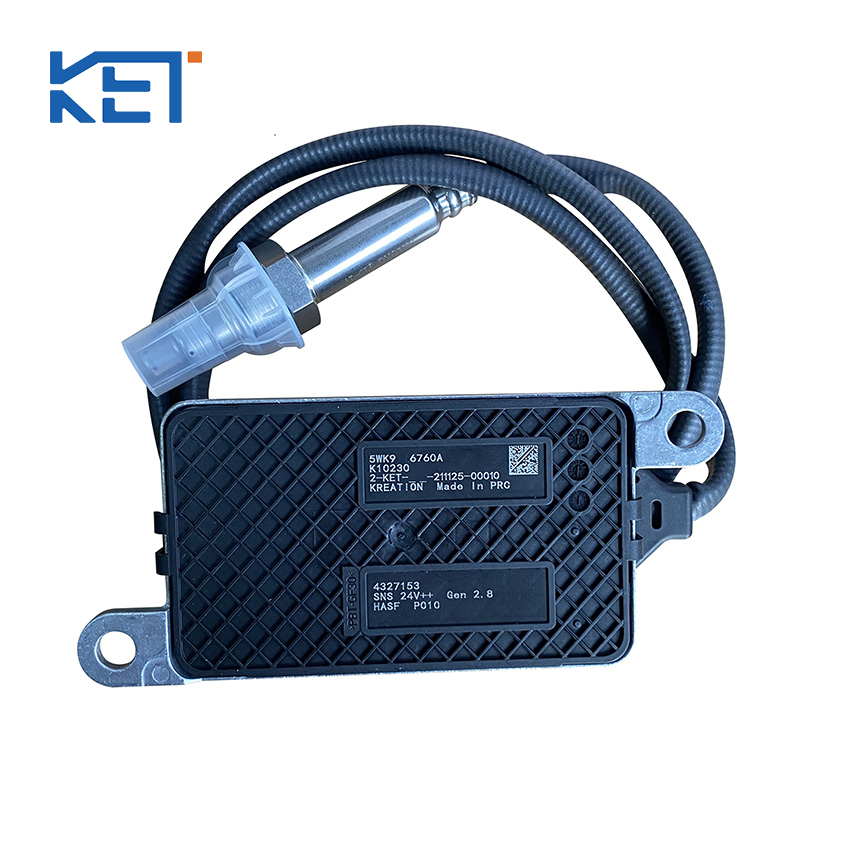
Selecting the right OEM NOx Sensor Supplier bridges this frustrating gap. You secure factory-grade precision, robust supply chains, and highly reliable warranties. This guide outlines the essential technical and commercial criteria required to vet and select a trustworthy partner.
Look beyond the price tag: True OEM-grade suppliers offer 100% new (never remanufactured) units with advanced digital signal processing to avoid ammonia cross-sensitivity.
Demand hard proof of warranty capability: Reliable suppliers use permanent stamped serial numbers—not stickers—to ensure warranty claims aren't denied due to extreme exhaust heat.
Evaluate the full vendor ecosystem: The best OEM NOx Sensor Suppliers provide extensive cross-reference catalogs, multi-node distribution for fast delivery, and technician-friendly packaging (e.g., included anti-seize compound).
Faulty NOx Sensors do more than just illuminate a check engine light. They actively disrupt fleet operations and drain profitability. Understanding these impacts highlights the urgent need for strict procurement standards.
Modern emissions systems rely on a delicate balance of data. An upstream or downstream sensor continuously feeds critical exhaust measurements directly to the engine control unit (ECU). When a failing sensor provides inaccurate readings, the ECU reacts defensively. It often triggers premature Diesel Exhaust Fluid (DEF) over-dosing. This wastes expensive fluid and damages the Selective Catalytic Reduction (SCR) catalyst over time. Worse, persistent errors force the engine into a derated state. Trucks lose power, crawl to a halt, and risk costly EPA or Euro VI compliance violations.
Low-tier sensors suffer from a notorious flaw known as ammonia cross-sensitivity. During normal SCR operation, DEF breaks down into ammonia gas to neutralize nitrogen oxides. Cheap sensors lack the sophisticated programming required to differentiate between actual NOx emissions and this harmless ammonia byproduct. The sensor incorrectly reports high NOx levels back to the ECU. This ammonia confusion trap generates false fault codes, prompting mechanics to replace perfectly good components while the actual issue goes unaddressed.
Inferior materials quickly surrender to the harsh reality of a heavy-duty exhaust pipe. Subpar hardware routinely fails against the "big three" environmental killers. First, severe carbon and soot buildup chokes the delicate sensing elements. Second, exhaust condensation introduces highly corrosive water vapor during cold starts. Finally, extreme thermal shock fractures brittle ceramic internals when exhaust temperatures fluctuate wildly during active regeneration cycles. Reliable suppliers engineer their components specifically to survive these extreme conditions.
You cannot judge a sensor by its external housing. The true value lies hidden inside the probe and the microchip. Fleet managers must verify specific technical benchmarks before approving a new vendor.
Exhaust environments are brutal. Components must withstand intense vibration and corrosive gases. Look for suppliers utilizing multi-layer laminated ceramics. High-strength alumina probe construction is non-negotiable. These advanced materials resist thermal fracturing and repel soot accumulation far better than standard single-layer ceramics.
Data transmission speed matters immensely. Prioritize suppliers whose controllers utilize digital signal processing. They should employ duty-cycle voltage rather than outdated analog continuous-voltage designs. Digital processing ensures remarkably faster response times. The ECU receives cleaner data, allowing it to adjust DEF dosing with pinpoint accuracy. This prevents the ammonia confusion discussed earlier.
Never accept remanufactured sensors. Mandate strictly new manufacturing for all emissions components. Remanufacturing processes typically only replace the external wiring or metal housing. They leave the original ceramic sensing element inside. This compromised core carries severe inherent degradation risks. A degraded ceramic element guarantees erratic readings and a severely shortened operational lifespan.
Do not take a manufacturer's word regarding quality control. Verify independent audits. Ensure manufacturing facilities hold current IATF 16949 and ISO 9001 certifications. These specific credentials prove they maintain strict automotive-grade quality management systems. They document every step from raw material sourcing to final assembly calibration.
Chart: Technical Comparison of Sensor Grades | ||
Feature / Specification | OEM-Grade Suppliers | Low-Tier / Aftermarket Knock-offs |
|---|---|---|
Core Condition | 100% Brand New | Often Remanufactured or Cleaned |
Signal Processing | Digital (Duty-Cycle Voltage) | Analog (Continuous-Voltage) |
Material Science | Multi-layer Laminated Alumina | Single-layer Brittle Ceramics |
Quality Certifications | IATF 16949 & ISO 9001 | None or Unverified |
Evaluating a supplier requires analyzing their entire business ecosystem. A great product means little if you cannot get it delivered on time. Use these five criteria to identify top-tier partners.
A credible partner does more than sell the top ten fastest-moving parts. They manage a deep catalog containing over 100 specific SKUs. This depth ensures coverage across diverse heavy-duty platforms, including Cummins, Detroit, PACCAR, and Mercedes-Benz. Furthermore, assess their cross-reference database accuracy. They should map aftermarket numbers directly to VINs or original OEM part numbers. Accurate mapping prevents costly mis-ordering and eliminates bay tie-ups.
Warranty policies reveal a manufacturer's confidence in their own engineering. Look for aggressive policies offering one-year, unlimited mileage guarantees. More importantly, conduct the "Sticker Test." Avoid suppliers using cheap adhesive stickers for serial numbers. Exhaust heat destroys these labels quickly. This gives the vendor a convenient loophole to deny your claim later. Choose an OEM NOx Sensor Supplier who actively laser-etches or steel-stamps their identification directly onto the metal housing.
Your trucks cannot wait weeks for a shipment to clear customs. Evaluate the vendor's domestic warehouse footprint carefully. Can they guarantee one-to-three-day delivery across your specific operational regions? Fast shipping minimizes expensive truck downtime. Additionally, verify their on-hand inventory levels. High domestic inventory serves as a critical indicator of strong financial health. It separates genuine manufacturers from highly leveraged, unreliable drop-shippers.
Packaging details tell you if the manufacturer understands shop-floor realities. Look for visual, durable packaging like transparent clamshells. This allows busy technicians to visually verify the part configuration before breaking the seal. Furthermore, top suppliers include essential installation extras. Providing a small packet of high-temperature anti-seize compound for the threads demonstrates genuine respect for the mechanic's workflow.
Hardware providers should act as technical partners. Does the supplier offer actionable technical training? Do they provide clear troubleshooting guides for your fleet mechanics? Reliable partners help your technicians identify the actual root cause of a failure. They teach teams how upstream injector issues kill downstream components. They focus on solving system-wide problems rather than just selling you another replacement probe.
Replacing broken hardware only solves half the problem. If mechanics do not address the underlying environmental causes, the new sensor will suffer the exact same fate. Proper implementation protocols protect your parts budget.
A reputable supplier actively encourages proper diagnostic procedures. Merely reading a fault code from a scanner is never enough. Code SPN 3216 / FMI 13 simply indicates a circuit error; it does not confirm the probe is physically dead. Technicians must perform a dynamic test. They should temporarily shut off the DEF injection system and force a manual DPF regeneration. During this test, mechanics verify a greater than 50 ppm variance between upstream and downstream sensors. If the variance exists, condemn the hardware. If not, look elsewhere for the electrical fault.
Fleet managers must confront harsh labor-cost realities. Exhaust components age at identical rates. If one sensor fails due to environmental degradation, the other sits right on the edge of failure. Replacing only the upstream unit guarantees the truck will return to the shop shortly for the downstream unit. Replacing both sensors simultaneously prevents secondary shop visits. This strategy slashes compounding labor expenses and dramatically improves overall fleet uptime metrics.
Transitioning to a new vendor requires methodical testing. Do not switch your entire purchasing volume overnight. Follow a structured, three-step integration plan to mitigate risk.
Step 1: Pilot Program: Purchase a small batch of test units. Install them on your highest-mileage, most punishing routes. Monitor DEF fluid consumption and track fault-code frequency meticulously over a 60-day period.
Step 2: SLA Verification: Test their service level agreements directly. Submit a pilot warranty claim on a test unit. Evaluate their customer service responsiveness and measure the speed of their return merchandise authorization (RMA) process.
Step 3: Procurement Integration: Once the pilot succeeds, negotiate and lock in volume pricing tiers. Finally, integrate their comprehensive cross-reference catalog directly into your internal fleet management software to streamline future ordering.
Choosing an industrial-grade emissions supplier represents a strategic risk-management decision, not just a simple transactional purchase. You are investing in fleet uptime and regulatory peace of mind. Prioritizing advanced material quality, demanding stringent warranty tracking via stamped serials, and verifying supply chain depth protects your operation.
These strict standards shield fleets from compounded labor costs and catastrophic unexpected downtime. We strongly encourage procurement teams and fleet managers to audit their current vendor relationships today. Compare your existing defect rates and warranty fulfillment processes against the technical criteria outlined in this guide. Take decisive action to upgrade your emissions supply chain.
A: A premium OEM-grade sensor typically lasts between 50,000 to 80,000 miles (or roughly 80,000 kilometers). However, severe environmental factors like heavy soot accumulation, internal coolant leaks, or frequent short trips can drastically reduce this expected lifespan.
A: The internal ceramic sensing element physically degrades over time. Remanufacturing processes often only replace the external housing or wiring harness. They leave a compromised, aged core inside that is highly susceptible to early failure, erratic readings, and ammonia cross-sensitivity.
A: Fault codes indicating low conversion efficiency (e.g., SPN 4364) are often triggered by degraded DEF fluid, crystallized DEF injectors, or an actually degraded SCR catalyst. A dynamic test comparing upstream and downstream ppm outputs is required to isolate the sensor as the root cause.