

close
Choose Your Site
Global
Social Media
Views: 0 Author: Site Editor Publish Time: 2026-03-24 Origin: Site
When sourcing a NOx sensor, many buyers focus first on price. That is understandable, especially in replacement and cost-sensitive projects. However, for OEM customers, fleet operators, distributors, and engineering buyers, the better question is not simply which option is cheaper. The better question is: which option is more suitable for the application, more stable in operation, and more reliable over the long term?
This is where the comparison between OEM NOx sensors and aftermarket NOx sensors becomes important.
At first glance, both may appear to serve the same purpose. Both are designed to measure nitrogen oxide levels in the exhaust system and support emissions control. But in real purchasing decisions, the difference goes far beyond the basic function. Buyers often need to compare platform fit, signal stability, communication compatibility, durability, support capability, and total lifecycle value.
In this article, we will look at what buyers should compare when evaluating OEM vs aftermarket NOx sensors, and how to choose the right option for different project goals.
An OEM NOx sensor is typically designed or supplied for original equipment applications, where compatibility, control strategy alignment, and long-term integration are critical. These projects usually place more emphasis on technical matching, communication requirements, harness design, software coordination, and application-specific development.
An aftermarket NOx sensor is usually intended for replacement demand in the service market. In many cases, the priority is to replace a failed unit quickly and restore vehicle operation. Buyers in this segment may be more sensitive to stock availability, interchangeability, and short-term cost.
That does not mean one is always good and the other is always bad. It means they are often chosen for different purposes. The right decision depends on what the buyer actually needs.
Before comparing products, buyers should first clarify the purpose of the purchase.
If the goal is to support a new vehicle platform, a controlled engineering project, or an OEM-level application, then the sensor must do more than fit physically. It may need to match communication logic, installation design, control requirements, and platform-specific expectations.
If the goal is replacement in the service market, then buyers may place more importance on practical interchangeability, installation convenience, and purchasing cost.
The mistake many buyers make is comparing OEM and aftermarket options as if they are completely interchangeable in every situation. In reality, the more technical the project is, the more important the details become.
When comparing OEM and aftermarket NOx sensors, buyers should review several factors instead of looking only at price or appearance.
| Comparison Area | OEM NOx Sensor Focus | Aftermarket NOx Sensor Focus |
|---|---|---|
| Application matching | Platform-specific fit and system alignment | Replacement compatibility for service use |
| Communication performance | ECU/message matching and integration stability | Functional replacement of existing unit |
| Design support | May include harness, connector, software, and structural coordination | Usually more standardized |
| Quality consistency | Often evaluated for long-term project reliability | May vary depending on supplier and production level |
| Technical support | Stronger for engineering and project cooperation | Usually more limited or transaction-focused |
| Cost logic | Higher focus on lifecycle value and system fit | Higher focus on upfront purchase cost |
This table does not mean that every OEM product is superior in every category or that every aftermarket product is low-end. It simply shows the different priorities that usually guide purchasing decisions.
This is one of the most important decision points.
For OEM and engineering projects, a NOx sensor is not only a replacement part. It is a component that has to work correctly within a specific system environment. That includes the exhaust layout, wiring route, ECU logic, packaging space, and service expectations.
In those situations, buyers should compare whether the supplier can support:
platform-specific matching
harness length or connector adaptation
installation-related design requirements
communication alignment
system-level integration support
Aftermarket options may work well for standard replacement needs, but when the application has stricter technical requirements, buyers should be careful not to assume that basic interchangeability is enough.
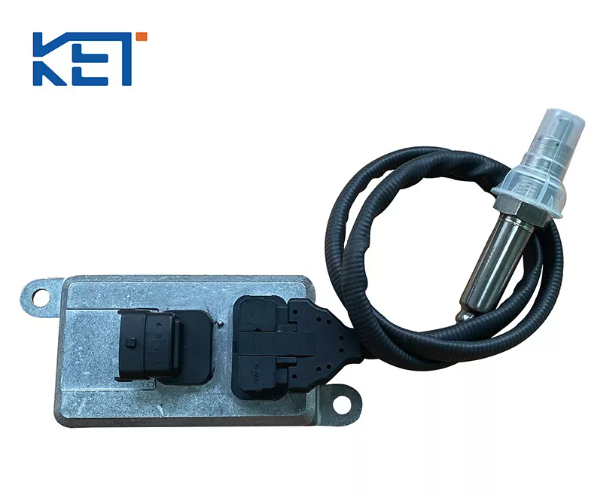
A NOx sensor does not create value just because it can be installed. It creates value when it provides stable and usable data to the control system.
For OEM buyers, signal quality and communication stability are often major evaluation points. If the sensor output does not align well with the vehicle control strategy, the system may face unstable readings, poor integration, or diagnostic issues. This is especially important in applications where the NOx sensor affects dosing logic, emissions monitoring, or fault handling.
Aftermarket buyers may also care about communication performance, but their evaluation is often more centered on whether the product can restore operation. OEM projects usually go further and ask whether the sensor can support long-term stable interaction with the control architecture.
So when comparing options, buyers should ask:
Does the sensor match the communication requirements of the platform?
Is the signal behavior stable under normal operating conditions?
Can the supplier explain compatibility clearly?
Is there support if platform-level issues appear during integration?
NOx sensors operate in a demanding environment. Heat, vibration, contamination, and long operating hours all affect sensor performance. That means buyers should pay close attention to durability-related factors, not just functional claims.
An OEM-oriented supplier is often expected to pay more attention to system-level durability, packaging design, and long-term project consistency. This may include the structure of the control unit, protection of the sensing element, connector reliability, harness durability, and resistance to real operating stress.
In the aftermarket, durability can also be strong, but quality may vary more depending on the supplier. This is why buyers should not compare sensors by appearance alone. A supplier’s engineering depth, production consistency, and quality control processes often matter more than the brochure description.
This is one of the clearest differences between OEM and aftermarket purchasing.
In OEM projects, buyers often need more than a standard sensor. They may require changes or matching support in areas such as:
harness length
connector type
message format
software-related functions
structural appearance
project-specific testing support
That level of support is rarely a core feature of standard aftermarket supply. Aftermarket products are generally designed for broader replacement demand, where standardization is more important than project customization.
So if the buyer is sourcing for a technical program, a platform adaptation, or a customer-specific requirement, an OEM-focused supplier is usually the more suitable choice.
Another major difference is what happens after the sensor is delivered.
In a simple transaction, the supplier ships the product and the process ends there. But in OEM and engineering projects, product delivery is often only one stage of the cooperation. Buyers may need support in:
specification confirmation
drawing or layout review
communication troubleshooting
testing coordination
application-related feedback
project adjustments during development
This kind of support can significantly reduce project risk. It can also save time when the customer is validating a new application or resolving an integration problem.
For buyers, one of the best questions to ask is not “Can you supply this NOx sensor?” but “How do you support the project if compatibility or communication issues appear?”
That question often reveals the real difference between a transactional supplier and an engineering-oriented partner.
Price always matters, but price alone is not the same as value.
An aftermarket NOx sensor may look more attractive at first because the purchase cost is lower. In many service and replacement cases, that may be the right commercial decision. But for OEM buyers, platform developers, or customers managing long-term projects, the lower unit cost does not automatically mean the lower total cost.
A sensor that does not match the system well may create:
additional validation work
installation changes
communication debugging
repeated replacement or warranty issues
delays in development or production
That is why professional buyers often compare total lifecycle value instead of unit price only.
| Buyer Concern | Lower Initial Cost Option | Higher System-Fit Option |
|---|---|---|
| Purchase budget | Easier to approve in the short term | May require stronger justification |
| Integration effort | May create hidden adaptation work | Usually better aligned with technical needs |
| Project risk | May be higher if support is limited | Often lower with better application support |
| Long-term stability | Depends heavily on supplier quality | Usually a stronger focus in OEM projects |
| Total value | Can be attractive for simple replacement | Often better for long-term programs |
This is why buyers should always compare the full commercial picture, not just the quotation line.
OEM NOx sensors are usually more suitable for:
vehicle manufacturers
engineering development teams
system integrators
platform upgrade projects
customers with communication or software requirements
buyers that need harness, connector, or structural matching
long-term supply programs with consistency requirements
In these situations, the buyer is typically looking for application fit, development cooperation, and stable long-term support.
Aftermarket NOx sensors are often more suitable for:
replacement-focused distributors
workshops
service repair businesses
cost-sensitive maintenance demand
short-term replacement needs
buyers that prioritize interchangeability and quick availability
In these cases, the key goal is often to restore operation efficiently and at a practical cost.
To make a better decision, buyers should ask suppliers the following questions:
Is this sensor intended for OEM integration or aftermarket replacement?
What level of communication compatibility can you confirm?
Can you support harness, connector, or software-related requirements?
What quality control measures are used for consistency?
What kind of technical support is available if a problem appears?
Is this option better for short-term replacement, or for long-term project use?
What risks should I consider beyond the unit price?
These questions help move the discussion from “cheap or expensive” to “suitable or unsuitable,” which is much more useful in real purchasing decisions.
When comparing OEM vs aftermarket NOx sensors, buyers should not assume that both options serve the same purpose in every project. The right choice depends on the real application, the technical requirements, and the level of support needed.
For simple replacement demand, an aftermarket option may be commercially efficient. But for OEM, engineering, and platform-based projects, buyers should pay much more attention to communication compatibility, development support, quality consistency, and long-term value.
In other words, the best NOx sensor is not always the cheapest one. It is the one that matches the project, supports the system, and reduces risk over the full lifecycle of the application.
As a smart sensor supplier, Zhejiang Kreation Electronic Technology Co., Ltd. focuses on NOx sensors, intelligent exhaust gas temperature sensors, and DEF-related sensing solutions for diesel aftertreatment systems. With experience in OEM-oriented development, application-based customization, and technical support, we help customers evaluate sensor solutions based on real project needs rather than unit price alone. If you are comparing NOx sensor options for an OEM program, engineering application, or long-term supply project, you are welcome to contact our team to discuss your requirements.
An OEM NOx sensor is usually developed or supplied for original equipment applications with stronger focus on system matching, communication compatibility, and project support. An aftermarket NOx sensor is more commonly used for replacement demand in the service market.
Not always. Quality depends on the supplier and manufacturing level. However, aftermarket products are often designed with different priorities than OEM projects, so buyers should compare suitability, support, and consistency carefully.
For long-term engineering or platform projects, OEM-focused solutions are usually more suitable because they offer stronger support for compatibility, customization, and project-level cooperation.
No. Buyers should compare total value, including compatibility, communication performance, quality consistency, support capability, and lifecycle risk.


