close
Choose Your Site
Global
Social Media
Views: 0 Author: Site Editor Publish Time: 2026-08-10 Origin: Site
Modern diesel emission standards drastically transformed the commercial transportation industry. Regulatory frameworks like Euro VI and EPA 2010+ introduced incredibly strict emission thresholds. Fleet operators now face massive operational and financial stakes to maintain compliance. Vehicles simply cannot operate legally or efficiently without precise exhaust monitoring. The NOx Sensor serves as the critical diagnostic link between a modern diesel engine and its complex exhaust aftertreatment system. It continuously measures harmful nitrogen oxide levels to keep heavy-duty trucks running cleanly. When this sensitive component fails, the entire emission control system breaks down rapidly. This article provides technical buyers, fleet managers, and mechanics with a highly actionable framework. You will learn exactly how to understand, evaluate, and replace these faulty components correctly. We designed this guide to help you minimize vehicle downtime, avoid forced engine de-rates, and bypass severe regulatory penalties.
Regulatory Compliance: The diesel NOx sensor is mandatory for monitoring nitrogen oxide levels, directly preventing compliance violations and forced engine de-rates.
System Synergy: It functions alongside the Selective Catalytic Reduction (SCR) system to optimize Diesel Exhaust Fluid (DEF) dosing.
Failure Risks: Contamination and thermal shock are primary failure modes; ignoring them leads to "limp mode" and significant revenue loss.
Purchasing Criteria: Evaluating replacements requires looking beyond price—prioritizing ceramic element quality, ECU compatibility, and proven durability.
Commercial fleets operate in heavily regulated environments. Transport authorities regularly enforce strict environmental guidelines on diesel emissions. Excessive emissions lead to immediate penalties. In many jurisdictions, non-compliant vehicles get grounded immediately. An unreliable emission system threatens core business operations. You simply cannot afford unpredictable asset downtime. The diesel emission control strategy relies entirely on accurate data. A functional sensor provides this exact data in real time.
The primary success criterion for emission compliance is precision. A high-functioning sensor guarantees exact DEF dosing. It ensures the system injects the perfect amount of fluid into the exhaust stream. Proper dosing maintains legal emission thresholds effortlessly. It prevents the system from wasting expensive DEF fluid. Accurate measurements also protect engine performance. An engine runs smoothly when its exhaust backpressure and emission parameters remain stable. You maximize fuel efficiency when the aftertreatment system operates properly.
Sensor failure carries severe financial implications. You face direct costs and hidden operational burdens. First, you lose valuable diagnostic time in the repair bay. Mechanics often spend hours tracing complex electrical faults. Second, a faulty reading often triggers heavy DEF over-dosing. You waste expensive fluid rapidly. This excess fluid often crystallizes inside the exhaust pipe. Crystallization destroys the expensive catalyst material over time.
Furthermore, sensor failure aggressively impacts vehicle operation. When the Engine Control Unit (ECU) detects missing emission data, it takes protective action. It initiates a severe torque reduction protocol known as limp mode. Limp mode restricts vehicle speed to a crawl. Drivers cannot maintain highway speeds or deliver loads on time. This enforced downtime disrupts supply chains and damages customer relationships. Reliable components prevent these cascading failures.
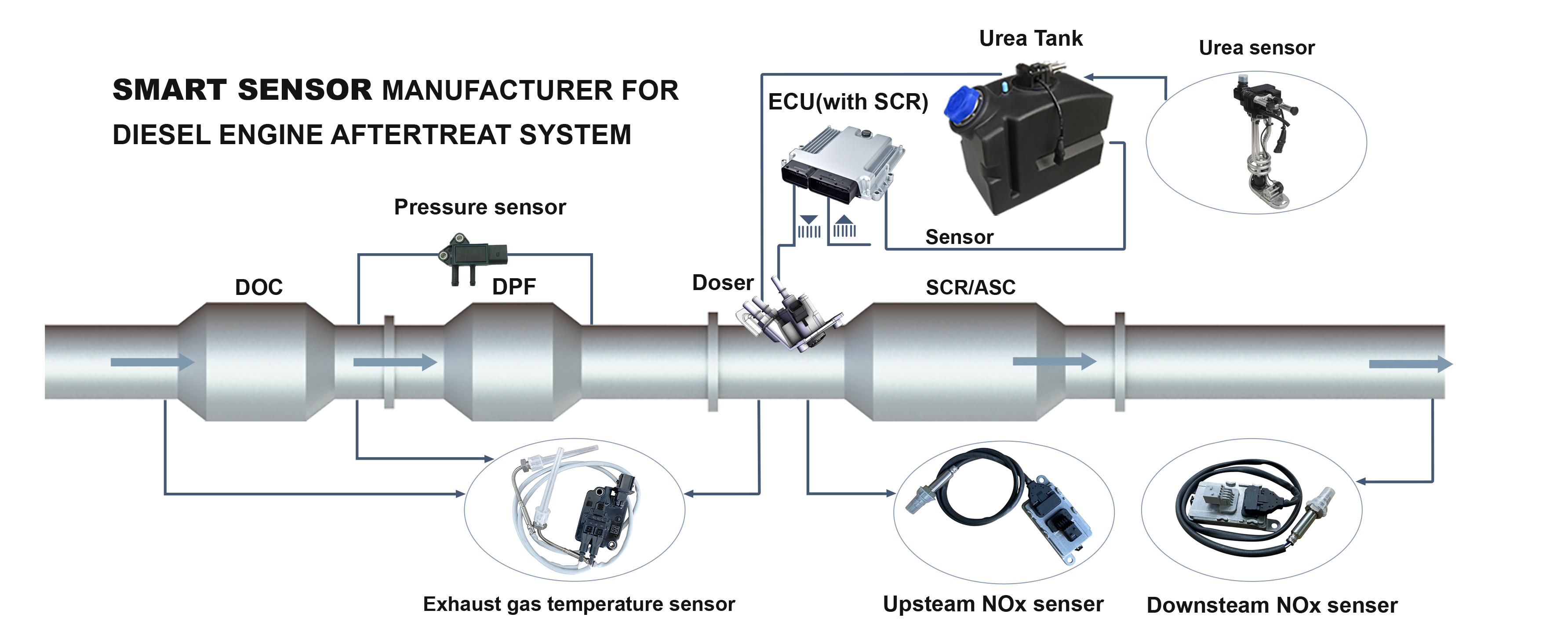
Understanding internal sensor mechanics helps you diagnose problems accurately. The modern emission system uses a dual-sensor strategy. Manufacturers place one sensor before the catalyst and one after it. This dual setup ensures complete system transparency. We call these the upstream and downstream sensors.
Table: Functional Comparison of Upstream and Downstream Monitoring
Sensor Position | Primary Function | Operational Outcome |
|---|---|---|
Upstream (Engine-Out) | Measures raw nitrogen oxide levels leaving the turbocharger. | Calculates the exact DEF injection volume required for neutralization. |
Downstream (Tailpipe) | Measures remaining nitrogen oxide levels exiting the system. | Verifies the overall efficiency and health of the SCR catalyst. |
The core evaluation dimension for these components is extreme precision. The internal sensing element relies on advanced zirconia ceramic technology. The zirconia ceramic reacts highly specifically to exhaust gases. The sensor utilizes a complex dual-chamber micro-pump system. The first chamber extracts oxygen from the trapped exhaust gas. The second chamber reduces the remaining nitrogen oxide into basic nitrogen and oxygen ions. This chemical reduction generates a tiny electrical current.
The internal microprocessor translates this micro-current into a readable digital signal. The ECU relies on this exact signal. Minor deviations in reading accuracy cause major issues. If the sensor reads too low, the system under-doses the fluid. Under-dosing causes illegal emission spikes and triggers dashboard fault codes. If the sensor reads too high, the system over-doses the fluid. Over-dosing creates solid urea crystals. These crystals block the exhaust flow completely.
It remains important to maintain an objective tone regarding part longevity. No manufacturer can honestly claim any sensor is completely fail-proof. We must acknowledge the harsh operational reality. Every SCR NOx sensor is a consumable item. They endure brutal conditions daily. They survive extreme thermal shock during engine regeneration cycles. They resist constant vibration and acidic soot buildup. Buyers should expect eventual wear and plan maintenance schedules accordingly.
Catching failures early prevents catastrophic exhaust damage. Fleet managers must understand specific implementation realities. You cannot wait for a complete breakdown to schedule repairs. Recognizing early warning signs keeps your trucks on the road. Drivers and mechanics should communicate clearly about vehicle behavior. Several clear indicators signal an immediate replacement decision.
Watch out for these highly specific failure symptoms:
Illuminated Warning Lights: The Check Engine Light (CEL) or Malfunction Indicator Lamp (MIL) is usually the first sign. Modern trucks also feature specific DEF or emission warning icons on the dashboard.
Abnormal Fluid Consumption: Drivers might notice sudden spikes in DEF usage. The tank empties much faster than normal. This indicates the ECU is over-compensating for erratic sensor data.
Rough Engine Operation: The engine might idle roughly. You might experience a sudden, inexplicable loss of engine pulling power on steep grades.
Frequent Regeneration: The system may attempt active regeneration cycles far too often, burning excess diesel fuel in the process.
Symptoms alone do not guarantee a faulty probe. You must perform strict diagnostic validation. Mechanics should never replace parts based solely on a dashboard light. We highly recommend using a professional heavy-duty OBD scanner. Connect the scanner to the diagnostic port. You need to verify specific internal fault codes.
Common emission codes fall into the P2200 to P2225 range. For example, P2202 indicates a circuit voltage issue. P2221 indicates a heater control circuit failure. Verifying the exact code prevents unnecessary parts spend. Sometimes a corroded wiring harness causes the code, not the probe itself. Always monitor the live data stream. If the scanner shows the nitrogen oxide reading stuck at zero PPM, the component has likely failed internally.
Purchasing replacement emission parts requires careful consideration. Fleet buyers and independent mechanics face distinct solution categories. You must choose between Original Equipment Manufacturer parts and independent aftermarket alternatives. Each category presents specific financial and operational tradeoffs. You must align your choice with your fleet budget and vehicle lifecycle.
Original Equipment Manufacturer (OEM) components come directly from the vehicle builder or their primary tier-one supplier. The advantages are clear. You get guaranteed ECU compatibility right out of the box. OEM factories utilize rigorous quality control processes. They ensure strict regulatory compliance across all jurisdictions. However, OEM parts carry significant drawbacks. The primary negative is a much higher upfront capital cost. They can severely strain tight maintenance budgets.
Aftermarket sensors provide a different value proposition. The main advantage is cost-effectiveness. You can often save substantial money per unit. They also offer wider availability. You can source them quickly for mixed fleets from local distributors. The critical downside is highly variable quality. Some aftermarket brands deliver excellent performance. Others use cheap internal ceramics that fail within months.
Buyers need robust shortlisting logic to navigate aftermarket choices. Use this specific checklist when evaluating a diesel NOx sensor:
Verify Ceramic Probe Quality: Ask the supplier about the internal zirconia element. It must demonstrate high resistance to rapid thermal shock.
Inspect the External Housing: Check for a robust anti-corrosion metal housing. The exhaust pipe environment is highly acidic.
Examine the Wiring Harness: Ensure the manufacturer uses high-grade, heat-resistant wiring. Cheap plastic connectors melt against the hot exhaust shield.
Demand Clear Warranty Terms: Never buy emission parts without a strong warranty. Look for verifiable industry certifications like ISO 9001 or TS 16949.
Replacing emission components carries specific adoption risks. Mechanics often assume the job ends once they tighten the threads. This assumption causes endless headaches. Simply swapping the physical part rarely resolves the underlying issue. If you ignore system resets, the vehicle will remain broken. The engine computer holds onto old failure data aggressively.
Strict installation protocols dictate long-term success. You must handle the new component with extreme care. Dropping it on the concrete floor can shatter the internal ceramic instantly. Mechanics must avoid using anti-seize compounds anywhere near the sensor tip. Many technicians use copper grease on exhaust bolts out of habit. If this grease touches the porous ceramic shield, it causes immediate chemical contamination. The heat bakes the grease into the ceramic, ruining the part before the truck even starts.
Always ensure proper torque specifications during installation. Over-tightening damages the delicate internal threads. Under-tightening causes high-pressure exhaust leaks. Exhaust leaks pull ambient oxygen into the exhaust stream. This false oxygen skews the readings completely.
Post-installation calibration is absolutely mandatory. You cannot skip this final step. Mechanics must use an advanced diagnostic tool to clear all existing ECU fault codes. Next, you must perform a dedicated SCR system reset. The module needs to clear its learned fuel trim values. Finally, the driver should complete an adaptation drive cycle. This drive cycle forces the exhaust up to operating temperature. It ensures the control module recognizes and validates the new data stream correctly. Skipping this calibration leaves the truck trapped in limp mode.
The diesel emission system represents a massive technical achievement in commercial transportation. The monitoring probe acts as the brain of this system. We must reiterate its primary role. The diesel nitrogen oxide sensor remains a mission-critical component for regulatory compliance. It ensures optimal fleet efficiency. It is definitely not just a standard, disposable replacement part. Its performance dictates your vehicle's ability to operate legally and profitably.
We advise fleet decision-makers to look beyond the initial purchase price. You must balance upfront capital costs with guaranteed long-term reliability. Source fully tested, high-grade replacement parts. Ensure they align perfectly with your specific vehicle class and daily operational demands. Protect your internal components from contamination. Train your mechanics on proper digital calibration techniques. Following these strict guidelines ensures maximum uptime, improves fuel economy, and protects your business from costly compliance violations.
A: Yes, temporarily, but the engine control module (ECM) will eventually trigger "limp mode," drastically reducing speed and power to force a repair.
A: Typically between 50,000 to 60,000 miles, though heavy-duty applications or excessive soot contamination can shorten this lifespan.
A: No. The internal ceramic elements are highly sensitive; attempts to clean them with solvents or wire brushes usually cause irreversible damage. Replacement is the only reliable fix.