close
Choose Your Site
Global
Social Media
Views: 0 Author: Site Editor Publish Time: 2026-08-17 Origin: Site
Launching a new diesel engine platform requires navigating increasingly stringent global emissions standards. Examples include frameworks like EPA 2027 and Euro VII. These new mandates demand near-zero tailpipe output levels across varying engine loads. Delaying the integration of vital emission monitoring components can severely bottleneck your entire development lifecycle. Pinpointing the exact prototyping phase to integrate, calibrate, and validate a diesel NOx sensor is critical. Early validation ensures an effective Selective Catalytic Reduction (SCR) strategy. Proper planning protects you from late-stage compliance failures and massive cost overruns.
This guide outlines the essential timeline, system architecture requirements, and key evaluation criteria. You will learn how to specify highly reliable components during your new platform development. We created this resource specifically for engine platform architects, emission compliance engineers, and OEM procurement teams. You will discover actionable insights below to streamline your next engine launch.
Early Integration is Mandatory: A diesel NOx sensor must be spec'd during the early Selective Catalytic Reduction (SCR) design phase to allow for proper CAN bus calibration and closed-loop control modeling.
Dual-Sensor Architecture: Modern compliant platforms typically require both pre-SCR and post-SCR NOx sensors for accurate Diesel Exhaust Fluid (DEF) dosing and OBD (On-Board Diagnostics) compliance.
Durability Mitigates Warranty Risk: Evaluating sensors based on thermal shock resistance and ceramic element longevity directly correlates to reduced "limp mode" incidents and lower warranty claims in the field.
Supplier Scalability Matters: Shortlisting requires looking beyond bench-test performance to assess a supplier's production scalability, firmware support, and supply chain resilience.
Original Equipment Manufacturer (OEM) platform delays frequently stem from fundamental compliance failures. Many development teams fail to meet updated EPA or Euro emission regulations during final testing. Once an engine architecture is locked, retrofitting emission controls becomes remarkably cost-prohibitive. Physical space constraints within the chassis and rigid software limitations make late additions nearly impossible. You must engineer compliance into the system from day one.
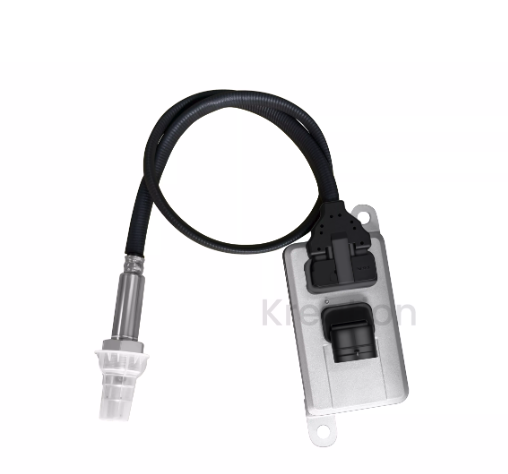
A highly accurate NOx Sensor serves as your primary compliance trigger. Specifying this component is non-negotiable for modern platforms. You need it when targeting heavy-duty on-highway standards. It is equally critical for Tier 4 Final off-highway certifications. Without precise exhaust gas monitoring, engines cannot dynamically adjust to transient load changes. Regulatory bodies now mandate continuous On-Board Diagnostics (OBD) monitoring. The system must flag excessive emissions immediately.
Your core success criteria depend on securing regulatory certification on the first pass. However, you must achieve this milestone while maintaining strict engine performance and fuel efficiency targets. Balancing emission control with torque output remains a major engineering challenge. An inaccurate sensor forces the Engine Control Module (ECM) to overcompensate. It might inject too much Diesel Exhaust Fluid (DEF) or alter combustion timing. This overcompensation degrades overall fuel economy.
We highly recommend adopting an evidence-oriented viewpoint during procurement. Avoid suppliers who promise universal compliance across all platforms. There is no plug-and-play solution in modern diesel aftertreatment. Every engine model features unique exhaust flow characteristics and temperature gradients. Sensor firmware must be tightly calibrated to your specific engine maps and regulatory targets. Proper calibration prevents expensive redesigns. It ensures your platform passes stringent certification audits smoothly.
Common Mistake: Relying on legacy sensor specifications for new EPA 2027 platforms. Newer mandates require significantly tighter accuracy tolerances at much lower exhaust temperatures.
Modern diesel platforms rely on sophisticated aftertreatment networks. You must carefully define your system architecture before building physical prototypes. The system heavily relies on dual-sensor configurations. We classify these hardware solutions into two distinct functional categories based on their mounting location.
First, we have Upstream (Engine-Out) Sensors. Engineers mount this unit just past the turbocharger, before the catalyst system. It measures raw emissions exiting the engine block. This data informs the ECM regarding initial DEF dosing requirements. Accurate upstream data prevents under-dosing, which leads to compliance failures.
Second, we utilize Downstream (Tailpipe-Out) Sensors. You place this unit after the SCR catalyst. It verifies the overall efficiency of the catalyst reduction process. It ensures the final tailpipe output remains strictly within legal limits. This verification loop is mandatory. It prevents the ECM from triggering severe engine derating events.
Table: Upstream vs. Downstream Architecture Comparison
Architecture Position | Primary Function | ECM Action Trigger |
|---|---|---|
Upstream (Pre-SCR) | Measures raw engine-out emissions | Calculates initial DEF injection rate |
Downstream (Post-SCR) | Verifies catalyst conversion efficiency | Adjusts dosing loop; flags OBD errors |
Your integration timeline directly dictates project momentum. Hardware mounting points and wiring harnesses must be finalized early. Complete these physical designs before initiating the first physical prototype build. Exhaust pipe routing heavily influences sensor placement. Poor routing causes condensation pooling near the sensor boss. Software integration begins much earlier than many expect. You should start mapping communication arrays during initial bench testing.
Consider technical fit as a primary evaluation dimension. Ensure the selected SCR NOx sensor communicates seamlessly via standard protocols. Most heavy-duty platforms utilize SAE J1939 over the CAN bus network. Ensure you verify baud rates (typically 250 kbps or 500 kbps) for compatibility. You must also match the platform's voltage architecture exactly. Heavy trucks typically use 24V systems. Light-duty commercial platforms often require 12V variants. Mismatched voltages will destroy the internal microprocessor immediately.
Sourcing reliable components requires a strict feature-to-outcome evaluation framework. You must analyze how physical build quality impacts long-term field performance. Paper specifications mean very little if the hardware fails in brutal real-world environments.
First, focus heavily on ceramic sensing element durability. The probe houses a fragile yttria-stabilized zirconia ceramic chip. This element determines the sensor's lifespan in harsh exhaust environments. Commercial diesel exhaust systems generate intense mechanical vibrations. They also produce extreme temperature fluctuations during regeneration cycles. A robust ceramic element resists structural micro-cracking under these brutal conditions.
Second, prioritize signal response time. You need faster millisecond response times from the sensing element. Quick data transmission allows the ECM to adjust DEF dosing dynamically. Rapid, precise dosing prevents ammonia slip. Ammonia slip occurs when unreacted DEF exits the tailpipe. Faster response times also drastically reduce excess fluid consumption. Sluggish sensors cause the ECM to lag behind transient engine load changes.
You should apply a skeptical lens when reviewing supplier documentation. Avoid exaggerated marketing claims regarding infinite lifespans. No sensor is entirely immune to fouling over thousands of hours. Look for transparent engineering data from the supplier. Ask for documentation regarding sensor lifespan under continuous high-soot conditions. Extreme idling applications often choke inferior probes quickly. Reliable manufacturers will provide accurate, mathematically modeled failure-rate data.
Warranty exposure demands careful consideration during procurement. A cheaper initial unit cost almost always translates to higher failure rates in the field. Inferior components trigger false Diagnostic Trouble Codes (DTCs). These codes force commercial trucks into limp mode. Unwarranted limp mode events cause costly vehicle downtime. Fleet operators despise unplanned downtime and will penalize OEMs for it. Specifying a premium NOx sensor protects your brand reputation. It reduces warranty claims drastically over the engine's lifecycle.
Transitioning from computer-aided design (CAD) models to physical prototypes exposes hidden engineering friction. You must anticipate these challenges to keep your development program on schedule. Ignoring implementation realities leads to frustrating delays.
The calibration challenge is significant. Software integration is typically the highest point of friction. Poorly calibrated ECM communication can result in erratic data packets. The ECM interprets these dropped CAN bus packets as critical emission failures. This results in false tailpipe readings. False readings trigger unwarranted engine derates. Drivers experience this as sudden power loss.
Thermal management presents massive operational risks. Cold starts present a high risk of thermal shock to the system. Exhaust condensation often pools inside the pipe overnight. If this cold moisture hits a rapidly heating sensor element, the ceramic cracks instantly. You must manage the internal heater circuit carefully through software logic.
Implement a strict risk mitigation strategy to protect early prototypes:
Require suppliers to provide extensive dew-point operational data mapping.
Design exhaust routing to minimize water pooling near the sensor boss (ideally angled between 10 to 80 degrees above horizontal).
Implement ECM software delays. Ensure exhaust moisture is completely evaporated before the sensor heater is fully activated.
Embrace adoption realities early in the cycle. Budget plenty of time for multiple iterations of firmware flashing. You will conduct this flashing constantly during field-testing. Physical testing reveals anomalous readings caused by specific exhaust routing designs. Turbulence near the probe tip can distort gas concentration measurements. You must tune out these anomalies through iterative software updates. Close collaboration with your sensor supplier's engineering team is mandatory here.
Procurement teams need a structured supplier evaluation framework. Bench-test performance alone cannot guarantee long-term production success. You must evaluate potential partners holistically to ensure reliable mass production.
Evaluate their technical support capabilities deeply. Do they provide direct engineering support during ECM calibration? You need engineers who understand complex SAE J1939 CAN bus packet structures. Without direct support, troubleshooting communication errors takes months. Ask them about their typical response times for software debugging during prototype phases.
Assess their true production capacity. Can they meet your Start of Production (SOP) volumes without lead-time fluctuations? Supply chain resilience is vital today. A brilliant prototype is utterly useless if the supplier cannot scale manufacturing. Request detailed audits of their sub-tier component sourcing.
Examine their quality control infrastructure. Look for standard automotive manufacturing certifications. IATF 16949 certification is a mandatory baseline for any credible supplier. Furthermore, request transparent end-of-line testing protocols. Every unit must undergo rigorous gas bench testing before shipping. Sample-based testing is insufficient for emission-critical components.
Follow these actionable next steps to initiate procurement:
Define your baseline emission targets, exhaust temperature profiles, and targeted operating hours clearly.
Request engineering samples, 3D CAD models, and communication protocol documentation from shortlisted suppliers.
Initiate hardware-in-the-loop (HIL) bench testing to validate CAN bus integration prior to full prototype assembly.
Conduct intensive thermal shock cycle testing on all received hardware samples.
Integrating emission monitoring hardware into a new engine platform is never an afterthought. It remains a foundational component of modern diesel architecture. Proper integration dictates regulatory compliance, engine performance, and long-term field reliability.
Plan hardware placement and CAN bus integration before finalizing the first prototype.
Mitigate thermal shock risks through smart exhaust routing and precise software heater delays.
Prioritize suppliers who offer robust firmware integration support and transparent durability data.
Avoid manufacturers competing solely on unit price, as they drastically increase warranty risks.
Take immediate action to secure your development timeline. Define your testing parameters today. Contact our engineering team for a dedicated consultation on sensor specifications. We can help you navigate complex integration challenges. Alternatively, download our technical requirement checklist for new platform integration to streamline your workflow.
A: Hardware dimensions and communication protocols should be sourced during the initial SCR system design phase, well before the first physical prototype is built. Early sourcing allows engineers to optimize exhaust pipe routing to prevent condensation pooling and finalize software handshake protocols.
A: Rarely. Most modern compliance frameworks (EPA 2010+, Euro VI/VII) require a dual-sensor architecture (pre-SCR and post-SCR) to calculate conversion efficiency accurately. Relying on a single sensor generally fails to meet stringent OBD compliance monitoring standards.
A: The most common causes are thermal shock from moisture during cold starts, severe physical vibration due to poor exhaust routing, or soot-fouling from unoptimized engine mapping. Proper ECM delay strategies and angled boss mounting mitigate these issues.
A: The vast majority of commercial diesel NOx sensors utilize a dedicated microprocessor within the sensor probe's control module to send data via the CAN bus (typically SAE J1939). This allows rapid transmission of gas concentration data and self-diagnostic alerts.