close
Choose Your Site
Global
Social Media
Views: 0 Author: Site Editor Publish Time: 2026-08-03 Origin: Site
Modern emission control depends heavily on precise data. You cannot view the diesel NOx sensor simply as a regulatory hurdle. It acts as the primary data gatekeeper for engine performance and emission compliance. Heavy-duty vehicles rely on a Selective Catalytic Reduction (SCR) system to neutralize harmful exhaust gases. This closed-loop environment needs highly accurate sensor readings. Without them, the engine cannot function properly. It will trigger immediate performance derates. The business reality hits hard when parts fail. Misunderstanding this sensor data causes massive headaches. You might install sub-par replacement components. Doing so directly leads to fleet downtime and frustrating misdiagnosis scenarios. It elevates your overall maintenance burdens significantly. We will explore exactly how these sensors measure nitrogen oxides and why their data dictates fluid dosing. You will learn to diagnose faults correctly and source reliable replacements to keep your vehicles moving.
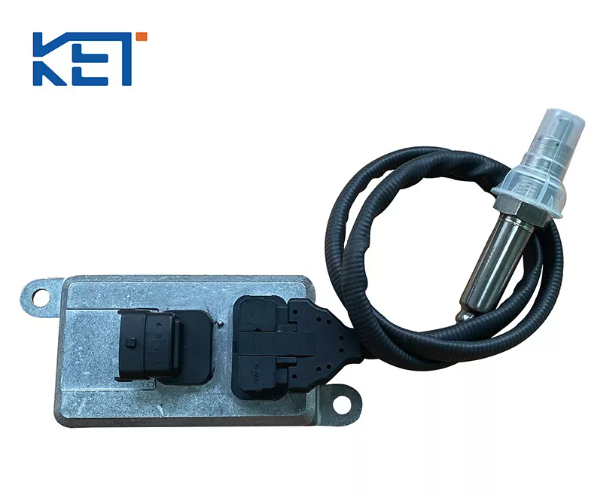
Core Function: A diesel NOx sensor measures the concentration of Nitrogen Oxides (NO and NO2) and Oxygen (O2) in the exhaust gas to manage compliance and catalyst efficiency.
System Integration: It dictates the precise dosing of Diesel Exhaust Fluid (DEF) required to neutralize harmful emissions within the SCR system.
Operational Impact: Sensor inaccuracies trigger severe operational penalties, including reduced engine power (limp mode) and forced idle.
Purchasing Logic: Evaluating replacement SCR NOx sensors requires scrutinizing the ceramic probe's thermal resistance, the control module's firmware stability, and exact OEM cross-reference data.
Understanding the internal mechanics of emission sensors is critical for proper diagnostics. These components operate as miniature chemical laboratories. They endure extreme heat and corrosive exhaust gases. The sensor analyzes the exhaust stream continuously. It reports precise gas concentrations back to the vehicle computer.
The primary job involves identifying nitrogen oxide levels. Diesel combustion naturally produces NO and NO2 gases. We refer to these collectively as NOx. The sensor detects these gases in parts per million (ppm). It samples the exhaust gas passing over its ceramic probe. High ppm readings indicate incomplete emission conversion. The system uses this exact ppm value to adjust engine parameters. It ensures the vehicle stays within legal emission limits.
Measuring NOx requires isolating it from other gases. Exhaust streams contain significant amounts of oxygen. This oxygen interferes with accurate NOx detection. To solve this, the sensor uses a dual-chamber design. The first sensing chamber acts as an oxygen pump. It actively removes excess O2 from the gas sample. This extraction process leaves a purified gas mixture. The purified gas then enters the second chamber. Here, the sensor can read the true NOx concentration without oxygen interference.
The physical measurement must become digital data. The sensor relies on a specialized Zirconia ceramic element. When heated to high temperatures, this element reacts to NOx gases. The chemical reaction generates a tiny micro-voltage. This voltage is directly proportional to the gas concentration. The sensor contains a built-in microprocessor inside its control module. This microprocessor reads the analog micro-voltage instantly. It translates the voltage into a digital CAN bus signal. It sends this precise digital message to the Engine Control Unit (ECU). The ECU processes this data in real time.
Modern diesel aftertreatment systems operate in a continuous feedback loop. The ECU monitors exhaust conditions constantly. It adjusts chemical dosing based on incoming sensor data. The SCR NOx sensor provides the essential feedback required for this balancing act.
Most commercial systems utilize two distinct sensors. They work together to monitor the entire catalyst process. We place them at different stages of the exhaust pipe.
Upstream Sensor (Engine Out): Mechanics locate this sensor before the SCR catalyst. It measures raw, untreated emissions exiting the turbocharger. The ECU reads this baseline data first. It calculates the exact amount of Diesel Exhaust Fluid (DEF) needed for treatment.
Downstream Sensor (Tailpipe Out): Manufacturers position this sensor after the SCR catalyst. It measures the post-catalyst exhaust gas. Its data verifies the actual conversion efficiency of the catalyst. It ensures the vehicle complies with strict EPA or Euro emission standards before the exhaust leaves the tailpipe.
The ECU manages a delicate chemical balance. It uses a closed-loop control logic to modulate DEF injection. If the downstream sensor detects elevated NOx levels, the system reacts immediately. The ECU commands the DEF doser to increase fluid injection. More DEF creates more ammonia in the catalyst. This ammonia breaks down the excess NOx into harmless nitrogen and water. Conversely, the system must avoid over-dosing. If it injects too much DEF, unreacted ammonia escapes the tailpipe. We call this condition ammonia slip. The downstream sensor helps detect this imbalance. The ECU will instantly reduce the DEF dose to correct the chemistry.
Ignoring sensor health creates severe operational hazards. A degraded sensor sends bad data to the ECU. Bad data forces the vehicle into protective modes. Fleet managers face massive repair bills when simple sensor issues escalate.
A failing sensing probe often misreports gas levels. It might read artificially high NOx concentrations. We consider this a false positive reading. The ECU trusts this inaccurate data implicitly. It assumes the emission system has failed entirely. Regulatory software mandates immediate action to protect the environment. The ECU triggers strict engine derate protocols. It will reduce available engine torque initially. If the false reading persists, it enforces severe speed limitations. You might find your commercial truck limited to 5 mph. This limp mode ruins delivery schedules and requires costly towing.
Sensor inaccuracies also destroy expensive hardware. An inaccurate upstream sensor might request excessive DEF continuously. The doser injects more fluid than the exhaust heat can vaporize. The unburnt DEF accumulates inside the exhaust pipe. It bakes onto the SCR catalyst surface. This process causes severe crystalline buildup. The white crystals block exhaust flow and poison the catalyst materials. Replacing a crystallized SCR catalyst costs thousands of dollars. The original faulty sensor only costs a fraction of that price. Accurate data prevents this catastrophic chemical buildup.
Environmental realities cause premature sensor failure. The ceramic probe operates at extreme temperatures inside the pipe. Cold moisture sometimes hits the hot ceramic element upon cold starts. This sudden temperature change causes thermal shock. The brittle ceramic cracks instantly, destroying the sensor. Additionally, engine issues can produce excessive black soot. Heavy soot coats the protective tip of the sensor. It blinds the sensing element completely. The blocked sensor cannot sample exhaust gases properly. It sends flatlined or erratic data back to the ECU.
Proper troubleshooting saves fleets enormous amounts of money. Technicians must differentiate between a broken NOx sensor and a poisoned catalyst. You need a structured approach to pinpoint the exact failure.
Many mechanics blindly replace sensors when they see an emission code. Industry professionals call this firing the "parts cannon". You must avoid replacing a functioning sensor unnecessarily. The root cause often lies elsewhere. A poisoned SCR catalyst causes identical high-emission readings. A faulty DEF doser also triggers similar fault codes. You must test the fluid pressure and fluid quality first. Confirm the doser sprays correctly before blaming the electronic sensors.
You must interpret diagnostic codes carefully. Not all codes indicate a failed ceramic probe. Modern scan tools provide specific sub-codes to guide your repair strategy.
Diagnostic Trouble Code Framework Chart
Failure Category | Typical Symptoms | Diagnostic Action Required |
|---|---|---|
Circuit / Communication Errors | Lost CAN bus signal, erratic voltage drops | Check wiring harnesses, inspect pins for corrosion, test battery voltage. |
Out-of-Range Performance | Constantly high/low ppm readings | Verify exhaust leaks, test DEF concentration, check catalyst health. |
Heater Circuit Malfunction | Sensor takes too long to reach operating temp | Check internal module fuses, replace sensor if internal heater has snapped. |
Distinguish between circuit errors and performance codes. Circuit errors usually point to broken wires or water intrusion in the control module. Out-of-range performance codes require deeper mechanical investigation. You must verify there are no exhaust leaks upstream of the sensor. An exhaust leak introduces outside oxygen, skewing the readings entirely.
Always inspect the pulled part physically before installing a replacement. The condition of the probe tells a distinct story about engine health.
White Residue: Indicates DEF crystallization. The doser is likely leaking or injecting too much fluid. Fix the dosing issue before installing the new part.
Thick Black Soot: Indicates upstream engine problems. The engine is running too rich. Check fuel injectors, EGR valves, and the DPF system. The soot will quickly kill the replacement unit if left unfixed.
Rattling Noise: Shake the probe gently. If you hear a rattle, thermal shock or severe vibration has shattered the internal ceramic element. The part is definitively destroyed.
Fleet operators must procure durable replacement parts. The market floods with various aftermarket options. Choosing the wrong part guarantees repeat failures. You must evaluate replacements based on strict engineering criteria.
Probe Material and Durability: The quality of the Zirconia (ZrO2) ceramic dictates the total lifespan. Tier-1 manufacturers use high-density ceramic compounds. These advanced materials resist thermal shock significantly better than cheap alternatives. They survive sudden temperature fluctuations during harsh winter cold starts.
Control Module (ECU) Integrity: The sensor includes a complex control box. This box houses the microprocessor. You need stable firmware within this module. Poorly coded firmware fails to communicate properly on the CAN bus network. This communication failure triggers phantom diagnostic codes. Premium units undergo rigorous software validation to ensure seamless ECU handshakes.
OEM vs. High-Quality Aftermarket: Ultra-cheap aftermarket sensors often fail within weeks. They suffer from poor factory calibration and weak internal wire bonding. You should look for Tier-1 quality replacements instead. Identify them through comprehensive warranty terms and manufacturing transparency. Ensure the supplier provides exact OEM cross-reference matching. This guarantees the connector pins and CAN protocols align perfectly.
Anti-Seize Pre-Application: Practical installation details matter immensely. High-quality replacement units include factory-applied, high-temperature anti-seize paste on the threads. This prevents thread galling during installation. It also ensures the next mechanic can remove the part easily years later. Never use standard copper grease, as it can contaminate the sensitive probe tip.
The modern diesel emission system requires flawless digital feedback to operate. The sensor acts as a high-precision chemical laboratory. It performs real-time gas analysis while under extreme thermal and physical stress. Understanding its dual-chamber oxygen pumping and voltage translation helps you diagnose issues accurately. You must utilize strict diagnostic protocols to prevent firing the parts cannon. Verifying DEF quality and checking for exhaust leaks saves time and money. Standardizing on high-quality replacements protects your bottom-line vehicle uptime. Reliable components prevent cascading SCR failures and keep your heavy-duty vehicles safely out of limp mode.
A: No. You should never attempt to clean it mechanically. Wire brushes or harsh chemical solvents destroy the fragile zirconia ceramic element instantly. Once soot or DEF chemicals blind the microscopic pores of the probe, the damage is permanent. Replacement remains the only reliable business decision to restore accurate CAN bus communication.
A: A quality sensor typically lasts between 50,000 to 75,000 miles (or roughly 3,000 to 5,000 operating hours) under normal conditions. However, aggressive duty cycles drastically shorten this baseline. Excessive engine idling, poor quality diesel fuel, and contaminated DEF will degrade the ceramic element much faster.
A: It will not cause an immediate hard shutdown. Instead, regulatory software dictates a progressive engine derate sequence. The ECU first issues a dashboard warning. It then reduces engine torque. Finally, it limits vehicle speed strictly to idle or 5 mph until you repair the emission fault.
A: It is not strictly mandatory, but mechanics highly recommend it for high-mileage fleets. Both units endure the same thermal cycles and exhaust conditions. Replacing them in pairs maintains balanced, accurate data reporting to the ECU. This best practice prevents consecutive downtime events from happening a few weeks later.