
close
Choose Your Site
Global
Social Media
Views: 0 Author: Site Editor Publish Time: 2026-03-20 Origin: Site
For OEM buyers, choosing a NOx sensor is rarely just about finding a part number that fits. In real projects, requirements often go far beyond basic replacement compatibility. Different vehicles, engines, aftertreatment layouts, control strategies, and communication requirements can all affect how a sensor should be designed and integrated.
That is why many buyers look for more than a standard product. They want an OEM partner that can support technical customization, application matching, and development efficiency. In a modern diesel exhaust aftertreatment system, a NOx sensor is one of the key components that helps provide accurate exhaust data for SCR control and emissions management. If the sensor cannot match the platform requirements, the entire system may face communication issues, inaccurate data, unstable performance, or unnecessary integration costs.
So, what exactly can be customized in an OEM NOx sensor project?
The answer depends on the application, but in most cases, customization may involve sensing configuration, harness design, communication format, software functions, structural design, and even testing support. For OEM and engineering buyers, understanding these options early can help reduce development time and improve project success.
A NOx sensor is not only a monitoring component. It is part of a larger emissions control system. In diesel aftertreatment applications, NOx sensors provide concentration data to the control system so that the SCR strategy can calculate appropriate urea dosing and help the vehicle meet emissions targets. On some platforms, sensor design also needs to align with packaging constraints, ECU communication logic, harness routing, and service requirements.
For this reason, OEM projects often require a sensor solution that is matched to the customer’s platform rather than selected from a generic list. Customization becomes especially important when the buyer is developing a new application, adapting to a different engine family, or trying to improve integration efficiency across multiple vehicle models.
In an OEM NOx sensor project, customization usually focuses on the areas that most directly affect installation, communication, performance, and project compatibility.
| Customization Area | What Can Be Adjusted | Why It Matters |
|---|---|---|
| Probe configuration | Probe quantity, sensing layout, application-specific design | Helps match the sensor to different exhaust layouts and measurement requirements |
| Harness design | Harness length, routing direction, connector matching | Improves installation efficiency and reduces packaging conflicts |
| Communication format | Message format, output requirements, platform-level matching | Ensures the sensor can communicate correctly with the ECU or control system |
| Software functionality | Functional logic, calibration-related support, intelligent features | Supports different control strategies and platform needs |
| Structural design | External appearance, housing details, mounting-related design | Helps fit different engine bays, aftertreatment layouts, and service expectations |
| Testing support | Test tools, validation support, customized test functions | Improves development speed, verification efficiency, and troubleshooting capability |
This is also consistent with what many engineering teams need in real projects: not just a sensor, but a solution that can integrate smoothly into their vehicle or equipment platform.
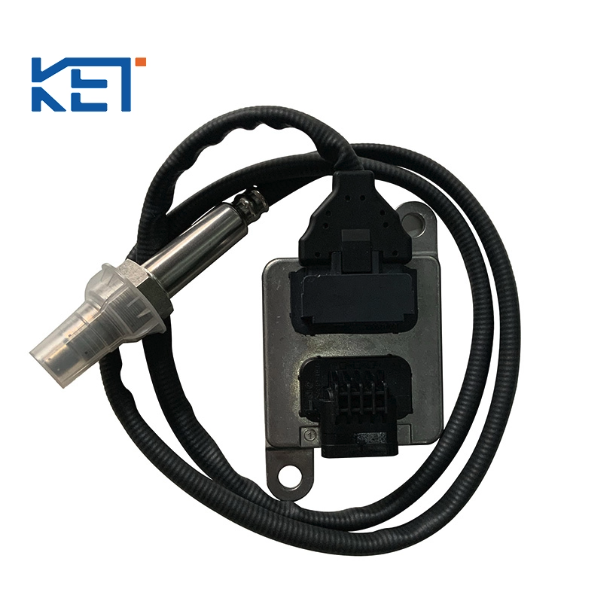
One of the first areas buyers may need to define is the probe-related configuration. Different applications may require different measurement strategies, installation structures, or sensing layouts. In some projects, this affects how the sensor is installed in the exhaust system and how it performs under specific conditions.
For OEM buyers, this means the sensor project should begin with a clear understanding of where the sensor will be placed, what the exhaust environment looks like, and what measurement goals the system needs to achieve. A supplier with OEM development experience should be able to review the application and recommend a suitable sensing configuration rather than simply offering a fixed standard option.
Harness design is one of the most practical and most frequently overlooked parts of OEM customization. A NOx sensor may perform well electrically, but if the harness is too short, too long, poorly routed, or mismatched with the vehicle interface, installation becomes more difficult and reliability may suffer.
That is why harness length, connector form, and packaging direction are often part of OEM discussions. Different vehicle platforms, off-road equipment, and industrial systems may require different harness layouts depending on the ECU location, heat-sensitive areas, and serviceability expectations.
For buyers, customizing the harness is not only about convenience. It can help reduce packaging issues during integration and avoid unnecessary redesign during the validation phase.
In many OEM projects, communication compatibility is just as important as the sensing element itself. The sensor has to communicate with the vehicle or control unit in a way that matches the platform requirement. If the message format does not align with the ECU strategy, the sensor may not work correctly even if the hardware itself is acceptable.
That is why communication-related customization can be a major part of an OEM NOx sensor project. Buyers often need support for message format alignment, signal interpretation consistency, and platform-level communication matching. This becomes especially important in projects where the sensor is being integrated into a new control architecture or where there are platform-specific software requirements.
A manufacturer that understands OEM communication needs can help reduce integration risk and improve development speed.
Software is another area where OEM customization can add real value. On your website, OEM service already emphasizes software-function-based development and intelligent function support, which is an important capability for engineering customers.
In practice, software-related customization may include platform-specific functional requirements, support for different control logic expectations, and project-oriented development adjustments. In some cases, software customization can also help customers improve compatibility with their existing control system or meet specialized operating requirements.
For OEM buyers, this means the discussion should not stop at “Do you have this sensor?” It should extend to “Can the sensor function be adapted to our system requirements?” That is often where a true engineering supplier stands apart from a standard parts seller.
Structural design also matters more than many buyers expect. Even when two sensors are functionally similar, the installation space, surrounding components, thermal environment, and maintenance requirements may differ from one platform to another.
Because of this, OEM projects may require adjustments to structural appearance or design details that help the sensor better fit the customer’s real-world application. This does not necessarily mean creating an entirely new sensor from the beginning. In many cases, the goal is to make practical design modifications that improve packaging compatibility and installation efficiency.
For engineering teams, this kind of customization can help reduce integration friction and support more stable project execution.
One of the most valuable but often underestimated parts of OEM support is testing capability. Your OEM service page mentions customized development of testing service tools, including NOx sensor testing equipment and related functional development based on customer needs.
This matters because OEM projects do not end when the sample is shipped. Buyers often need a way to verify sensor behavior, support development work, troubleshoot issues, or evaluate compatibility during the validation stage. If a supplier can support customized testing tools or project-specific test functions, the customer may be able to shorten development cycles and improve engineering confidence.
For buyers working on new vehicle platforms or technical validation projects, testing support can be as important as the sensor itself.
A successful OEM project usually starts with a clear technical brief. The more complete the buyer’s information is, the easier it becomes for the supplier to recommend the right solution and respond efficiently.
| Information to Prepare | Why It Helps |
|---|---|
| Application type | Helps define whether the project is for on-road, off-road, industrial, or another use case |
| Vehicle or engine platform | Supports compatibility review and application matching |
| Installation position | Helps evaluate packaging, harness routing, and sensing suitability |
| Communication requirements | Supports message format and control system alignment |
| Functional expectations | Clarifies whether software-related customization may be required |
| Target quantity or project stage | Helps determine whether the request is for prototyping, validation, or mass production |
| Drawings, photos, or reference samples | Speeds up engineering understanding and reduces communication errors |
| Timing expectations | Helps plan development, sampling, and production milestones |
When buyers prepare these details in advance, supplier communication becomes faster, more accurate, and more engineering-focused.
Not every supplier that sells NOx sensors is ready for OEM-level collaboration. For buyers, it is important to evaluate whether the supplier can support customization in a structured and technically reliable way.
A good OEM NOx sensor partner should be able to:
understand the application rather than only offer a generic catalog
explain what can and cannot be customized
support communication-related and software-related requirements
provide reasonable guidance on harness, structure, and integration details
assist with validation, testing, or project-specific tools when needed
communicate clearly during development, sampling, and production
The goal is not simply to buy a part. It is to work with a supplier who can help reduce project risk and improve the efficiency of technical cooperation.
An OEM NOx sensor project can involve much more than selecting a standard sensor model. Depending on the application, buyers may need customization in probe configuration, harness length, message format, software functions, structural design, and testing support.
For engineering teams and OEM buyers, understanding these customization areas early can help avoid delays, improve compatibility, and create a more efficient development process. It also makes it easier to choose a supplier that can do more than provide a product — one that can support a real technical project.
If you are planning a new application or looking for a more suitable NOx sensor solution, the best first step is to clearly define your platform requirements and discuss them with a supplier that understands OEM development needs.
As a smart sensor supplier, Zhejiang Kreation Electronic Technology Co., Ltd. focuses on products such as NOx sensors, intelligent exhaust gas temperature sensors, and DEF-related sensor solutions, with applications centered on diesel exhaust aftertreatment systems including SCR and DPF. The company also highlights model-based software development and support for customer customization needs, making it a suitable partner for OEM projects that require application matching, communication alignment, and technical development support. If you are evaluating a new NOx sensor project, you are welcome to contact our team to discuss your technical requirements and customization goals.


