close
Choose Your Site
Global
Social Media
Views: 0 Author: Site Editor Publish Time: 2026-10-29 Origin: Site
A failed emissions component quickly triggers engine derating, sudden limp mode, and massive fleet downtime. Ignoring this vital probe practically guarantees failed compliance checks and stalled daily operations. The replacement market is heavily flooded by cheap alternatives. Many of these units fail prematurely. Sometimes they simply cannot communicate at all. Choosing the wrong part leads to endless frustration and wasted repair budgets. We will walk you through a strict, spec-driven evaluation framework. You will learn exactly how to select a reliable NOx Sensor. This ensures long-term operational health and strict environmental compliance for your vehicle. Let us help you buy the correct component the very first time.
Part Number Precision: Cross-referencing the exact OEM part number is non-negotiable; visual similarity does not guarantee ECU compatibility.
Hardware Specs Matter: Voltage (12V vs. 24V), probe length, and connector pinouts must match factory specifications exactly.
Software Handshake: The sensor's control module firmware must be capable of communicating seamlessly with your specific vehicle's ECU to avoid ghost codes.
Total Cost of Ownership: Upfront savings on unverified aftermarket sensors are often negated by repeat labor costs and vehicle downtime.
Original Equipment Manufacturer (OEM) parts provide guaranteed ECU compatibility. They feature strict quality control regarding the ceramic sensing element. You receive a highly predictable lifespan. Dealerships rely on these parts because they eliminate guesswork. The upfront price tag runs high, but they prevent secondary diagnostic headaches.
The aftermarket reality presents a different scenario. Buyers see significant upfront cost savings. However, component quality remains highly variable. Some aftermarket brands deliver excellent durability. Others sell "white-label" sensors lacking brand backing or engineering support. You must differentiate between reputable manufacturers and cheap imports.
When evaluating aftermarket options, apply a strict evaluation framework. Look for ISO/TS 16949 certification. Demand transparent manufacturing origins. Reputable brands gladly share their testing protocols. They publish detailed material specifications. Never trust an unbranded white box.
Always perform a proper risk assessment before buying. Factor in your specific labor rates. Calculate potential downtime if an aftermarket probe fails within the first 10,000 miles. A cheap part becomes incredibly expensive when you pay a mechanic twice to install it. Prioritize long-term reliability over immediate discount pricing.
Feature | OEM Parts | Reputable Aftermarket | White-Label Aftermarket |
|---|---|---|---|
ECU Compatibility | Guaranteed exact match | Generally reliable | High risk of ghost codes |
Upfront Price | Highest | Moderate | Lowest |
Quality Certifications | Standardized (ISO) | Often ISO/TS 16949 | Rarely certified |
Warranty Support | Strong dealership backing | Varies by brand | Virtually nonexistent |
System voltage is an absolute dealbreaker. Light-duty trucks and passenger cars typically use 12V electrical systems. Heavy-duty commercial trucks, like Class 8 rigs, often utilize 24V systems. You must verify your vehicle's exact requirements before ordering.
Installing the wrong voltage unit causes immediate catastrophic failure. A 12V system cannot power a 24V module. Conversely, feeding 24 volts into a 12V module will instantly fry the internal circuitry. Always check the voltage stamp located directly on the original module housing.
Never assume a plug fits based on a quick glance. Verify the exact number of metal pins inside the connector. Examine the shape of the plastic housing closely. Manufacturers frequently update harness designs across various model years.
Follow these quick steps to verify pin configurations:
Disconnect the negative battery terminal before touching the harness.
Unplug the original module and count the physical pins.
Check for specific alignment tabs inside the plastic housing.
Compare these details against high-resolution photos of the replacement part.
A mismatched connector indicates an incompatible data protocol. Forcing a plug together destroys the delicate pins and ruins the entire engine wiring harness.
Physical dimensions play a massive role in successful installations. A cable falling short simply won't reach the module mounting point. You cannot stretch or splice these wires. Splicing alters electrical resistance and ruins calibration.
A cable running too long creates dangerous hazards. Excess wiring risks resting directly on the DPF or hot exhaust pipes. The insulation will melt, causing a direct short circuit. Always measure the original cable length carefully.
Additionally, examine the metal threads. Thread pitch must perfectly match the exhaust bung. Incorrect threads cause dangerous exhaust leaks. Exhaust leaks skew emissions readings and trigger further diagnostic trouble codes.
The internal zirconia ceramic element acts as the most failure-prone component. Exhaust streams subject this tiny element to extreme torture. High thermal shock resistance is absolutely vital. The element must survive sudden temperature spikes.
Condensation builds up inside cold exhaust pipes. Robust heater circuits evaporate this moisture quickly before it cracks the ceramic. High-quality replacements clearly specify their heater durability. Look for brands advertising upgraded ceramic compositions. Upgraded materials directly translate to longer service intervals and fewer headaches for your fleet.
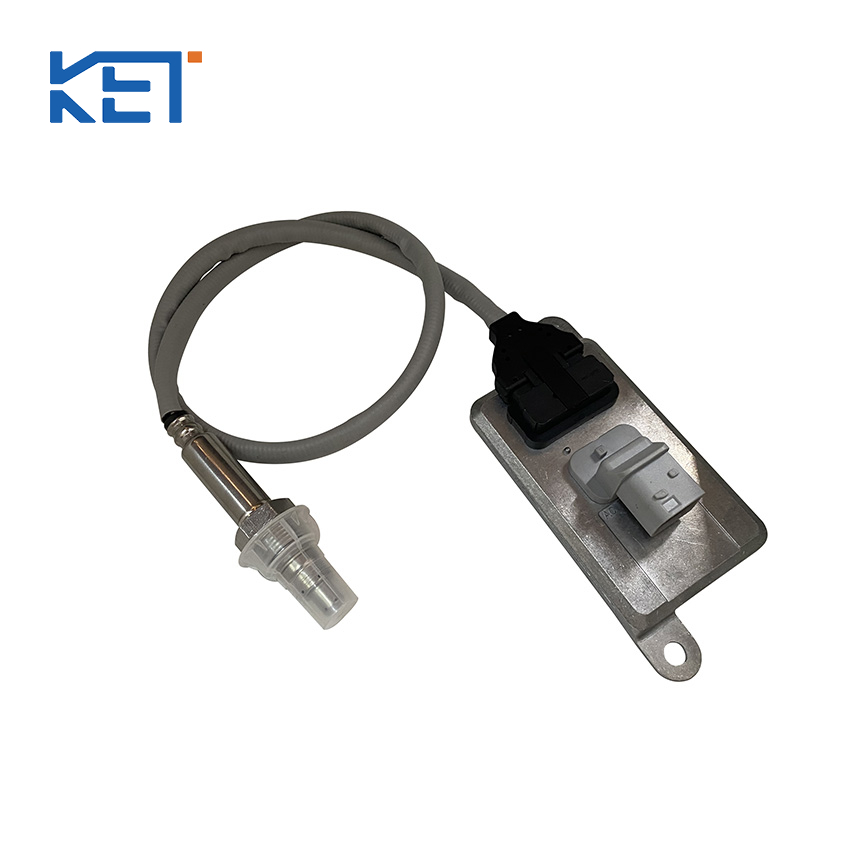
The CAN Bus handshake represents a critical software hurdle. A modern NOx Sensor is not just a dumb physical probe. It includes a sophisticated microprocessor module. This module processes chemical readings into digital signals.
The replacement must broadcast data at the exact baud rate expected by the ECU. If the communication speed mismatches, the engine computer ignores the data. The vehicle immediately throws a communication error code. Always match the firmware revision notes when buying aftermarket units.
Pay close attention to upstream versus downstream calibration. Manufacturers specifically calibrate these probes for their precise position. Pre-SCR units monitor raw exhaust gases coming from the engine. Post-SCR units measure the cleaned exhaust exiting the catalyst.
They are rarely interchangeable. Swapping their positions feeds backward data to the computer. This causes the DEF dosing system to malfunction entirely. Always double-check positional labels.
Finally, understand the specific update requirements. Note whether the new module requires an ECU flash. Most modern installations require a "learned values reset." You must perform this reset via an OBD2 bidirectional scan tool. Skipping this step leaves the vehicle trapped in limp mode.
Emissions compliance keeps your vehicle on the road legally. Ensure the replacement probe meets EPA or CARB standards. Your specific jurisdiction dictates these legal requirements. Failing an annual inspection due to a non-compliant aftermarket part wastes precious time and money.
Read electrical parts return policies thoroughly. Electrical components often carry strict "no return if installed" rules. Vendors implement these policies to prevent customers from using parts for diagnostic testing. You must verify the vendor's policy on defective out-of-the-box units. Reputable sellers offer clear RMA processes for genuinely faulty items.
Treat the warranty duration as a reliable proxy for build quality. Cheap components usually offer a 30-day return window. High-quality manufacturers proudly stand behind their engineering. Look for a minimum 12-month or unlimited-mileage warranty. Long warranties indicate the brand expects the component to survive harsh real-world conditions.
Best Practice: Keep all original receipts and packaging. Vendors often require the original box to process warranty claims.
Common Mistake: Buying from unknown overseas sellers. You will likely face impossible shipping costs if you need to execute a warranty return.
Handling fragility requires strict attention. Dropping the assembly on a concrete floor can crack the internal ceramic element instantly. You might not see any external damage. However, the internal fracture will trigger an immediate failure code upon startup. Treat the component like fragile glass during unboxing.
Check the exhaust bung threads before applying anything. Check if the replacement threads come pre-coated from the factory. Many high-end parts already feature specific high-temperature paste.
If applying manually, use extreme caution. Ensure zero anti-seize touches the actual probe tip. Chemicals in the paste will permanently poison the sensing element. A poisoned element reads false oxygen levels and ruins DEF dosing strategies.
Proper wiring harness routing prevents premature failure. Secure the harness tightly away from extreme heat sources. Use high-temperature zip ties provided by the manufacturer. Heat damage to the wiring remains a leading cause of denied warranty claims. Mechanics easily spot melted insulation during return inspections. Route the cables following the exact factory path.
Selecting the right replacement part demands strict attention to detail. Prioritize exact OEM cross-references above visual similarities. Validate every single hardware specification, including voltage and pin counts. Buy exclusively from transparent vendors offering robust return policies and clear warranties.
Retrieve your current module's exact part number directly from the housing. Never rely solely on generic parts catalogs. Take a clear photo of your old unit before adding any replacement to your cart. Protect your vehicle by making an informed, spec-driven purchase today.
A: Repair kits do exist, but they require splicing highly sensitive data wires. Resistance changes from manual splicing usually lead to inaccurate readings. This triggers immediate check engine lights. Full assembly replacement remains the trusted industry standard.
A: The physical component itself usually does not need manual coding. However, the ECU almost always requires a reset. You must perform a "learned values reset" via a bidirectional diagnostic tool to clear limp mode.
A: Immediate errors typically point to severe firmware mismatches. The aftermarket unit might have incorrect heater circuit resistance. Slow response times also cause the ECU's strict emission readiness monitors to fail the component instantly.
A: Upstream units generally mount near the turbocharger or DPF. Downstream units sit after the SCR catalyst. They are not interchangeable. Always check the physical part number stamped on the module to confirm its designated position.