
close
Choose Your Site
Global
Social Media
Views: 0 Author: Site Editor Publish Time: 2026-03-27 Origin: Site
An exhaust gas temperature sensor is more than a simple measurement device. In modern diesel and aftertreatment systems, it plays an important role in thermal monitoring, component protection, emissions control, and system diagnostics. Whether the application involves turbocharger monitoring, DPF regeneration control, or SCR efficiency management, the right sensor helps provide the temperature data needed for stable and reliable operation.
For buyers and engineers, choosing an exhaust gas temperature sensor is not only about finding a sensor that can withstand heat. It is about selecting a solution that fits the operating environment, installation point, response requirement, and system function of the application.
This becomes especially important in systems where temperature directly affects emissions performance and hardware durability. In a turbo application, temperature data may help protect components from excessive thermal stress. In a DPF system, temperature monitoring supports regeneration logic and filter protection. In an SCR system, temperature data helps the control unit understand whether the aftertreatment environment is in the correct operating window.
So how should buyers choose the right EGT sensor for these different monitoring tasks?
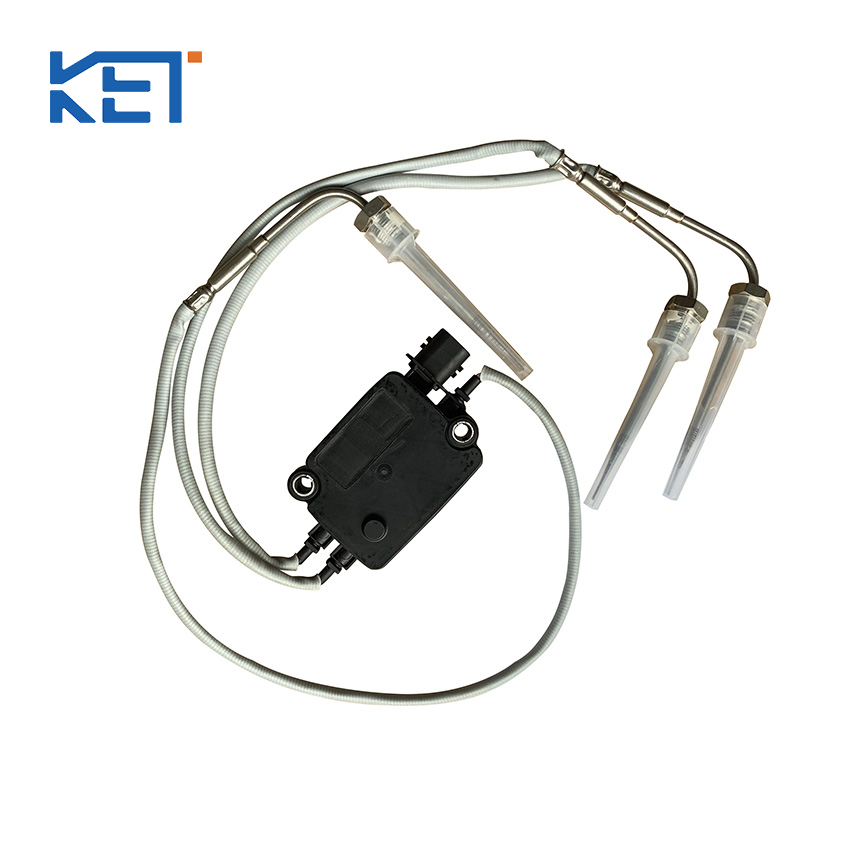
Exhaust systems operate under demanding conditions. Temperatures change quickly, installation points are limited, and components such as the turbocharger, DPF, DOC, and SCR catalyst all depend on controlled thermal conditions to function properly.
That is why an exhaust gas temperature sensor is often used not only to measure temperature, but also to support larger control decisions. A temperature reading may influence protection strategies, regeneration timing, system diagnostics, or aftertreatment efficiency.
For buyers, this means EGT sensor selection should start with one basic question:
What is the temperature data meant to support in this application?
If the answer is component protection, the sensor may need to emphasize durability and response under high heat. If the answer is DPF regeneration management, the sensor may need to support accurate and stable monitoring during changing thermal cycles. If the answer is SCR monitoring, the sensor may need to help the system understand whether the catalyst environment is suitable for effective emissions control.
Although all three applications use temperature data, they do not use it in the same way.
| Monitoring Area | Main Purpose | Key Temperature Concern |
|---|---|---|
| Turbo | Protect turbocharger and nearby exhaust components | High thermal load, rapid temperature change |
| DPF | Support regeneration control and filter protection | Regeneration temperature window and overheating risk |
| SCR | Support catalyst efficiency and dosing-related operating conditions | Whether the aftertreatment temperature is suitable for stable NOx reduction |
This is why buyers should avoid choosing an EGT sensor only by general specification. The installation position and monitoring purpose usually determine what matters most.
Turbocharger monitoring is usually associated with high thermal stress and fast exhaust temperature changes. In this environment, the sensor helps the system track the exhaust condition before or around the turbo-related area, depending on the system design.
For turbo monitoring, buyers should pay attention to:
high-temperature resistance
response speed
structural durability
vibration resistance
stable signal output under demanding conditions
The reason is simple: turbo-related monitoring often involves strong heat load and sharp operating changes. If the sensor reacts too slowly or is not suited to the thermal environment, the usefulness of the data may be reduced.
In practical selection, buyers should think about the actual operating profile. Is the platform a light-duty vehicle, a heavy-duty diesel truck, off-road equipment, or another high-load system? The more demanding the thermal environment is, the more important durability and application matching become.
DPF systems rely heavily on temperature information because thermal conditions are directly linked to regeneration strategy and filter protection. In many applications, the control system needs reliable exhaust temperature data to determine when regeneration conditions are appropriate and whether the filter is operating within a safe range.
That means an EGT sensor used for DPF monitoring should be selected with attention to:
stable measurement in changing temperature cycles
reliability during regeneration-related heat events
long-term consistency
installation suitability for the chosen position
signal quality for control and diagnostic functions
For buyers, one of the most important questions is whether the sensor will be used mainly for continuous monitoring, regeneration support, or protection logic. These priorities may affect what matters most during selection.
A sensor for DPF-related use should not only survive the environment. It should also support the control strategy with dependable temperature information over time.
SCR monitoring introduces another layer of complexity. In SCR systems, temperature is important because catalyst efficiency and dosing-related strategy depend on the thermal state of the exhaust aftertreatment environment.
If the thermal condition is not suitable, the system may not achieve the intended NOx reduction performance. That is why temperature data is often used as part of the broader control logic in SCR-equipped applications.
When choosing an exhaust gas temperature sensor for SCR monitoring, buyers should consider:
whether the sensor suits the expected thermal range of the monitoring point
whether response stability is adequate for system control
whether the installation position supports reliable measurement
whether the sensor integrates well with the broader aftertreatment control architecture
In this case, the sensor is not only helping monitor heat. It is helping the system understand whether the operating environment is suitable for efficient aftertreatment performance.
Once the application point is clear, buyers can compare EGT sensor options more effectively.
| Selection Factor | Why It Matters |
|---|---|
| Temperature range suitability | The sensor must match the thermal conditions of the actual application |
| Response performance | Faster and more stable readings improve monitoring usefulness |
| Durability | High heat, vibration, and long operating time require robust design |
| Installation compatibility | Thread, structure, harness routing, and packaging must fit the platform |
| Signal stability | Reliable output supports control, diagnostics, and system consistency |
| Application matching | The sensor should suit the real use case, not just the catalog description |
| Supplier support | Technical communication and application guidance reduce selection risk |
These factors are especially important when buyers are sourcing for engineering programs, OEM projects, or long-term replacement supply rather than one-time emergency purchases.
One of the most common mistakes in EGT sensor selection is treating all positions as if they create the same requirements. In reality, the sensor’s installation point has a major effect on what kind of performance matters most.
A sensor used near a turbo-related high-heat area may face different priorities from one used near a DPF or SCR-related monitoring point. That is why buyers should always define:
where the sensor will be installed
what function the temperature data supports
what the normal and peak operating conditions look like
how the harness and connector must be routed
what service or maintenance expectations exist
Without this context, it is easy to choose a sensor that looks suitable on paper but creates problems during installation or operation.
Many purchasing problems do not come from the sensor itself, but from incomplete selection logic. Common mistakes include:
A catalog temperature figure alone does not guarantee application fit.
Harness direction, mounting space, and service access all affect real-world suitability.
A sensor selected for component protection may not be ideal for control-focused monitoring if the priorities are different.
A lower-priced option may create higher cost later if stability, compatibility, or durability are not strong enough.
Even if all of them involve exhaust temperature, the operating logic and monitoring priorities are not the same.
For OEM and technical projects, the best approach is to treat EGT sensor selection as part of system matching rather than isolated component purchasing.
That means buyers should prepare:
application type
installation location
thermal operating range
platform or engine information
harness or connector requirements
control-system expectations
quantity stage, such as prototype, validation, or mass production
When this information is clear, suppliers can recommend a more suitable exhaust gas temperature sensor solution and reduce the risk of mismatched selection.
In some projects, buyers may also need support in harness customization, structural matching, or application-focused recommendations. This is especially true when the sensor is being integrated into a broader aftertreatment platform with SCR or DPF control requirements.
For some replacement needs, a standard EGT sensor may be sufficient. But for more complex engineering projects, buyers often benefit from working with a supplier that understands the application context and can support project-level matching.
This is especially valuable when:
the platform has packaging limits
the thermal environment is demanding
there are project-specific harness or structural needs
the sensor is part of a larger aftertreatment control strategy
long-term reliability is more important than short-term savings
In these cases, application-focused support can save time during validation and improve long-term project results.
Choosing the right exhaust gas temperature sensor for turbo, DPF, and SCR monitoring requires more than comparing temperature ratings or part descriptions. Buyers should start with the purpose of the measurement, the installation position, and the role the sensor plays in the system.
Turbo monitoring often emphasizes thermal stress and fast response. DPF monitoring is closely linked to regeneration and protection strategy. SCR monitoring supports the aftertreatment thermal window and overall emissions control logic. Because these goals are different, the selection process should also be different.
For buyers, the most effective way to reduce risk is to evaluate the sensor in its real system context: operating conditions, installation environment, control needs, durability expectations, and supplier support. A suitable EGT sensor is not just one that survives heat. It is one that provides reliable and useful data for the job it is meant to do.
As a smart sensor supplier, Zhejiang Kreation Electronic Technology Co., Ltd. focuses on intelligent exhaust gas temperature sensors, NOx sensors, and DEF-related sensing solutions for diesel aftertreatment systems such as SCR and DPF applications. With experience in OEM-oriented development, application-based customization, and technical support, we help customers evaluate sensor solutions based on real operating conditions and project requirements. If you are selecting an exhaust gas temperature sensor for a turbo, DPF, or SCR-related application, you are welcome to contact our team to discuss your technical needs.
An exhaust gas temperature sensor is used to monitor exhaust temperature in order to support component protection, aftertreatment control, regeneration management, and system diagnostics.
Not always. These monitoring points can involve different thermal conditions, control purposes, and installation requirements, so buyers should evaluate the application carefully.
Temperature data helps the system manage regeneration logic and protect the filter from unsuitable operating conditions.
SCR performance depends in part on the thermal condition of the aftertreatment system, so temperature data helps support stable and effective emissions control.
Key factors include temperature range suitability, durability, response performance, installation compatibility, signal stability, and supplier support.


