
close
Choose Your Site
Global
Social Media
Views: 0 Author: Site Editor Publish Time: 2026-03-17 Origin: Site
Modern diesel aftertreatment systems do not rely on one sensor alone. To reduce emissions effectively and keep the system stable under real operating conditions, the control strategy needs multiple data inputs. In an SCR system, NOx sensors, DEF-related sensors, and exhaust gas temperature (EGT) sensors work together to provide the control unit with the information it needs to manage urea dosing, monitor operating conditions, and support emissions compliance. Your website describes these sensor families as core data sources for SCR control, especially for NOx concentration, temperature, and urea-related data. Bosch similarly explains that sensors provide the temperature and NOx information used by the control unit to coordinate actuators and inject the urea-water solution in line with the operating strategy.
At a system level, SCR performance depends on three things happening together: the system must know how much NOx is present, whether the reducing agent (DEF/AdBlue) is suitable and available for dosing, and whether the exhaust temperature is within a range that allows the aftertreatment components to work efficiently and safely. If one of these data streams is missing or inaccurate, the control strategy becomes less precise, which can affect conversion efficiency, diagnostics, or component protection.
Selective Catalytic Reduction works by injecting a urea-water solution into the exhaust stream upstream of the SCR catalyst. The dosing system must meter the right amount of fluid for the current operating condition. Bosch describes this as a modular system in which the control unit uses sensor information to coordinate dosing, while the dosing module atomizes and distributes the DEF into the exhaust stream. That means the controller is not making a blind decision. It is relying on sensor feedback to determine when, how much, and under what conditions the fluid should be dosed.
This is where the three sensor families begin to connect. The NOx sensor indicates the nitrogen oxide content before and/or after treatment. The DEF sensor helps the system confirm that the urea solution in the supply path or tank-related environment is suitable and available. The EGT sensor shows whether the exhaust and aftertreatment components are in the appropriate thermal window for efficient conversion and component protection. On your site, Kreation states that its NOx, EGT, and DEF sensors mainly serve diesel exhaust aftertreatment systems and provide the most basic SCR data needed for control decisions.
The easiest way to understand the interaction is to look at what each sensor contributes to the system.
| Sensor Type | Main Data Provided | How the Data Is Used in the SCR System |
|---|---|---|
| NOx Sensor | Nitrogen oxide concentration in the exhaust | Helps evaluate emissions performance and supports urea dosing strategy and OBD-related monitoring |
| DEF Sensor | Urea-related information such as quality/concentration, temperature, and/or level depending on the system design | Helps confirm reducing-agent condition and supply readiness for stable dosing |
| EGT Sensor | Exhaust gas temperature at key locations | Helps keep components within the proper operating window and supports efficient aftertreatment performance |
This role split aligns with your website’s own system description, which states that NOx, EGT, and DEF sensors provide concentration, temperature, and urea concentration/temperature/liquid level data for SCR control, while Bosch and NTK explain that NOx data supports AdBlue dosing decisions and EGT data is important for exhaust-gas cleaning efficiency and component protection.
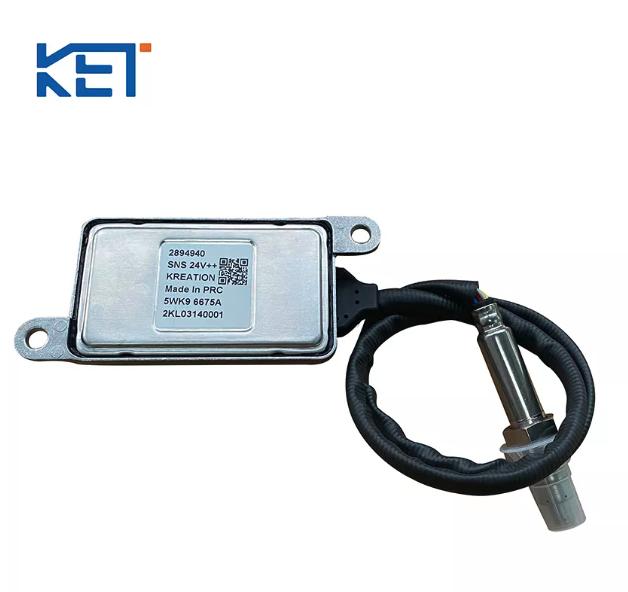
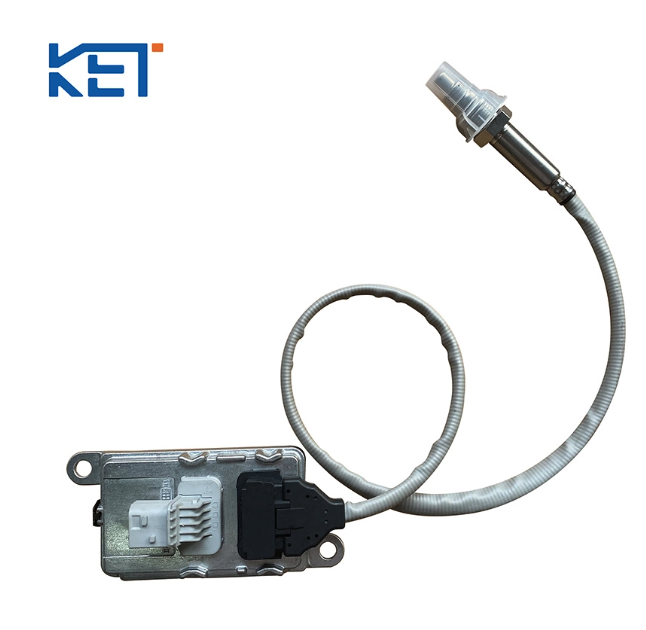
In an SCR system, the NOx sensor is one of the most important feedback elements because it directly reflects the nitrogen oxide situation in the exhaust gas. Bosch notes that in diesel applications the NOx sensor provides the signals used to evaluate the quantity of injected AdBlue in SCR systems. In practical terms, this means the controller can use NOx feedback to judge whether the emissions-reduction process is working as expected and whether the dosing strategy should be adjusted.
This is why NOx data is so central to closed-loop control. If the measured NOx level is higher than expected, the system may need to reassess dosing, conversion efficiency, or the condition of other aftertreatment components. If the NOx signal is inaccurate, the SCR strategy may respond incorrectly. For suppliers and engineers, this is one reason why sensor accuracy, controller quality, and communication stability matter so much in NOx sensor development. Kreation’s site also emphasizes the SCU, ceramic chip, and packaging as the three core elements of NOx sensor technology, highlighting how important the integrity of the full sensing system is.
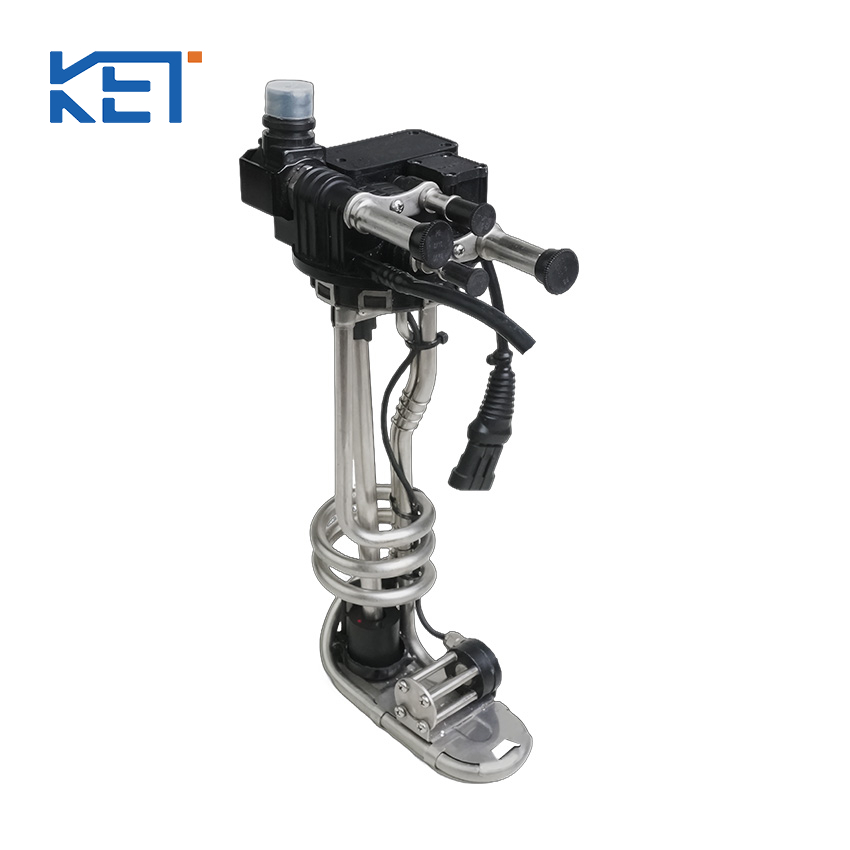
The DEF side of the system is equally important, even though it is often discussed less than NOx sensing. Bosch explains that the dosing system meters the urea-water solution and delivers it into the exhaust line upstream of the SCR catalyst. For that process to remain stable, the system needs confidence that the reducing agent is suitable and available. Your website specifically describes DEF-related sensing as providing urea concentration, temperature, and liquid-level information for SCR control.
From a systems perspective, this matters because even a well-calibrated NOx strategy can underperform if the reducing agent is not in the expected condition. If the DEF quality, concentration, temperature, or supply state is outside the required range, the dosing process may not deliver the intended reduction effect. That is why DEF-related sensing should not be treated as a separate accessory function. It is part of the system’s ability to maintain predictable dosing behavior.
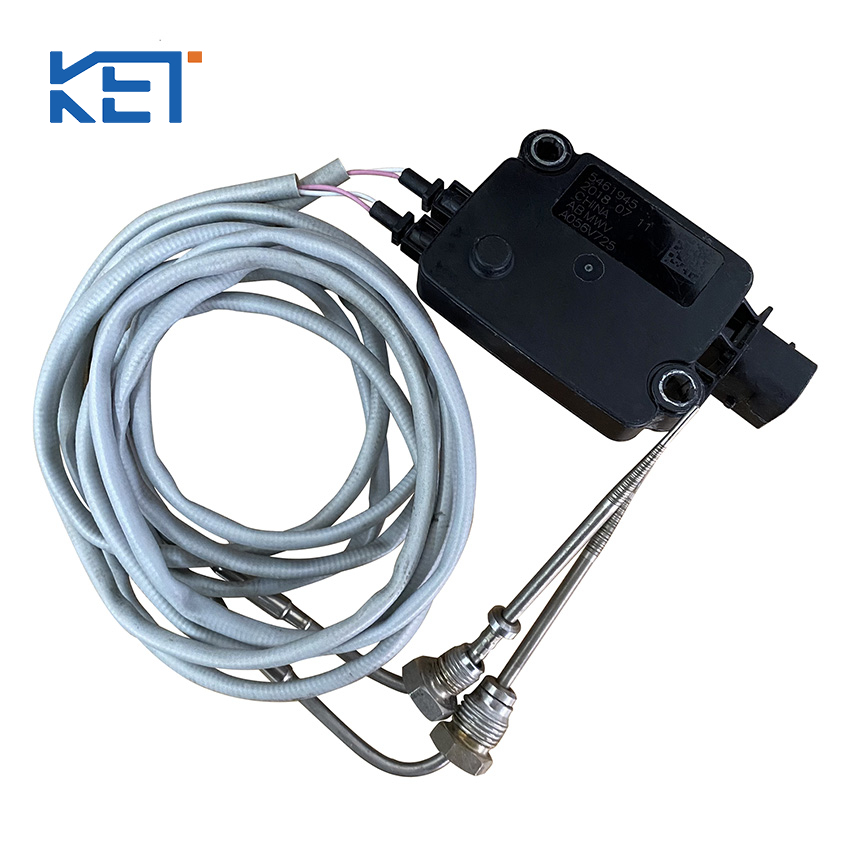
Temperature is one of the main factors that determines how well aftertreatment components can function. NTK states that exhaust gas temperature sensors monitor exhaust temperatures to ensure that exhaust-gas cleaning components achieve optimal conversion rates and to protect critical components from overheating. Your website adds that intelligent exhaust temperature sensors provide critical input for SCR and DPF control.
In practice, the EGT sensor helps the control system understand whether the thermal conditions are suitable for the current aftertreatment task. If the temperature is too low or too high for the intended operating condition, the system may need to adapt its strategy. EGT data is also valuable for protecting components located in the exhaust path and for supporting DPF-related logic where temperature management is critical. This makes the EGT sensor more than a passive measurement device; it is part of how the system balances emissions performance and hardware protection.
The real value of the SCR sensor set appears when these signals are interpreted together. The NOx sensor tells the system what is happening from an emissions standpoint. The DEF sensor helps confirm that the reductant being delivered is in the expected condition and available for dosing. The EGT sensor shows whether the thermal environment supports efficient reaction and safe operation. Taken together, these inputs allow the controller to make more accurate dosing and monitoring decisions than any one sensor could support alone.
A simple way to view this is:
NOx sensor = emissions feedback
DEF sensor = reductant condition and supply feedback
EGT sensor = thermal condition feedback
These three streams help the control unit determine whether the system is ready to dose, whether it is dosing under suitable conditions, and whether the observed emissions result matches expectations. This is exactly why a system-level article is useful: it shows that SCR accuracy is the result of coordinated sensing, not isolated components.
A useful engineering perspective is to look at what happens when one data source becomes unreliable.
| If This Signal Is Incorrect | Possible System-Level Effect |
|---|---|
| NOx sensor data is inaccurate | The controller may misjudge emissions performance or dosing effectiveness |
| DEF-related data is inaccurate | The system may not correctly assess reductant condition or dosing readiness |
| EGT data is inaccurate | The system may misread the thermal state of the aftertreatment components, affecting efficiency or protection strategy |
The exact result depends on the vehicle platform and control logic, but the broader point is consistent: in a modern SCR system, the sensors are interdependent from a control perspective. When one input is degraded, the controller’s decision quality also becomes less reliable. That is one reason why OEM-quality sensor integration and communication performance are so important in aftertreatment projects.
For OEM, engineering, and system-integration teams, the lesson is clear: it is not enough to evaluate NOx, DEF, and EGT sensors as separate product categories. They should also be considered as a coordinated data set within the aftertreatment architecture. A supplier that understands this system relationship is better positioned to support application matching, communication alignment, and project-level troubleshooting. Your website’s OEM and applications positioning already points in this direction by presenting these sensor families together in SCR- and DPF-related use cases.
This is also why cross-product capability matters. A company that can support NOx sensing, EGT sensing, and DEF-related sensing within the same aftertreatment framework may help customers simplify technical discussions and improve development efficiency. Even when each product is specified individually, the end goal is system performance.
An SCR system works best when it can combine accurate emissions feedback, reliable reductant information, and real-time thermal awareness. That is why NOx sensors, DEF sensors, and EGT sensors should be understood as complementary elements of one control strategy rather than three unrelated parts. In diesel aftertreatment, they help provide the controller with the core data needed to manage urea dosing, support catalyst efficiency, protect components, and maintain emissions compliance.
For buyers, engineers, and OEM teams, a system-level understanding also makes supplier evaluation easier. It becomes clearer which capabilities matter most: signal quality, communication reliability, application matching, and the ability to support real aftertreatment integration.
As a smart sensor supplier, Zhejiang Kreation Electronic Technology Co., Ltd. focuses on NOx sensors, intelligent exhaust gas temperature sensors, and DEF-related sensing solutions for diesel aftertreatment applications such as SCR and DPF systems. The company also highlights its capabilities in OEM-oriented development, model-based software support, and customization based on customer requirements, helping engineering and OEM customers match sensor solutions to real application needs. If you are evaluating an SCR-related project, you are welcome to contact our team to discuss your technical requirements and system goals.


